When the Supreme Court Intervenes in Protest Restrictions

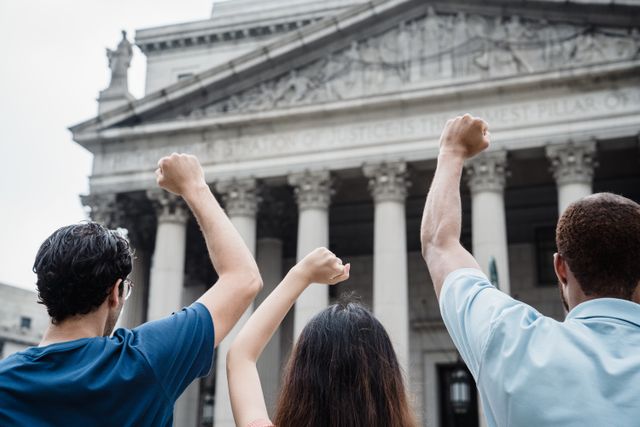

Peaceful protest is an important feature of a democratic society. It allows citizens to question government decisions, express grievances, and demand accountability. However, demonstrations can also create disputes over public safety, traffic, access to essential services, and the limits of police authority.
In India, these tensions frequently reach the courts. Citizens may challenge restrictions on demonstrations, preventive detention, internet shutdowns, or the closure of public spaces. Authorities may defend these measures as necessary to prevent violence or protect sensitive locations.
The Supreme Court of India plays a crucial role in resolving such constitutional disputes. It examines whether government action respects fundamental rights and whether restrictions have a lawful and reasonable basis. Its intervention can influence how authorities manage demonstrations and how citizens understand their rights.
These questions became particularly visible during the Delhi protest restrictions in October 2026. The Supreme Court issued directions concerning detention, public movement, and transport services while examining challenges to the authorities’ actions. The proceedings highlighted a central democratic question: how can the State maintain public order without unnecessarily suppressing peaceful dissent?
The Constitutional Right to Peaceful Protest
Article 19 and Freedom of Expression
The Constitution of India protects several freedoms that support peaceful protest. Article 19(1)(a) guarantees citizens the right to freedom of speech and expression. Article 19(1)(b) protects their right to assemble peacefully and without arms. Article 19(1)(c) protects the right to form associations and unions.
Together, these provisions allow citizens to communicate dissatisfaction collectively. A demonstration can bring public attention to unemployment, environmental concerns, administrative decisions, corruption allegations, or other social issues. It can also help communities communicate grievances that receive limited attention through ordinary political channels.
However, these freedoms are not unlimited. Articles 19(2) and 19(3) permit reasonable restrictions on speech and peaceful assembly under specified constitutional conditions. Public order is one of the relevant considerations.
This means the Constitution protects peaceful dissent without granting an unrestricted right to assemble anywhere, at any time, or in any number. Authorities may regulate demonstrations, but their decisions must remain within the law. The distinction between legitimate regulation and an unjustified restriction is central to judicial review.
Why the Right Matters in a Democracy
Protest provides a public channel for challenging decisions without resorting to violence. It allows citizens to express collective concerns and encourages authorities to respond to public grievances. Its importance becomes especially clear when people believe that conventional complaint mechanisms have failed.
The right also protects unpopular opinions. Constitutional freedoms would have limited value if demonstrations were permitted only when authorities agreed with their message. A democratic system must accommodate disagreement while protecting the safety and rights of others.
At the same time, peaceful protest does not eliminate the legitimate interests of commuters, residents, businesses, or people who need access to hospitals and public services. Courts must consider these competing interests rather than treating either public order or protest rights as automatically decisive.
When Can Authorities Restrict a Protest?
Authorities may regulate demonstrations for reasons connected with public safety, traffic management, security, and the prevention of violence. Depending on the applicable law and circumstances, they may require permission, specify a venue, limit crowd size, establish routes, or impose conditions on the time and manner of an assembly.
These measures can be lawful when they address genuine concerns and remain proportionate to the risks. A large procession near a sensitive installation may require different arrangements from a small gathering in an established protest area.
Preventive action does not always require authorities to wait until violence occurs. Law enforcement may act on credible information about an imminent threat. However, the possibility of disruption cannot automatically justify every restriction. The connection between the anticipated danger and the measure imposed remains important.
For example, restricting access to a specific location may be more targeted than shutting down transport across a large part of a city. Authorities should consider whether less disruptive measures could address the same security concern.
The Supreme Court’s decisions have repeatedly recognized the State’s power to regulate public assemblies. They have also emphasized that regulation cannot become an arbitrary means of extinguishing constitutional freedoms.
What the Supreme Court Examines During Intervention
Whether the Restriction Has a Legal Basis
The first question is whether the authority acted under a valid legal provision and followed the required procedure. Officials cannot rely solely on general assertions that a demonstration may create inconvenience. Their action must have an identifiable legal foundation.
The court may examine the order itself, the authority that issued it, the reasons recorded, and the circumstances surrounding its implementation. It may also consider whether the applicable legal safeguards were respected.
A restriction may raise constitutional concerns if it is arbitrary, unsupported by relevant circumstances, or applied beyond the powers granted by law. However, the outcome depends on the precise facts and legal provisions involved.
Whether the Measure Is Proportionate
Proportionality is an important principle in disputes involving fundamental rights. It asks whether a restriction serves a legitimate purpose and whether the measure is appropriately connected to that purpose.
The analysis may consider the seriousness of the threat, the likely effectiveness of the restriction, and the burden imposed on citizens. It also considers whether a less restrictive measure could reasonably achieve the same objective.
A city-wide transport shutdown, for instance, may affect thousands of people who have no connection with a demonstration. If targeted security arrangements could address the identified risk, a broader restriction may require stronger justification.
Proportionality does not mean that authorities must always choose the least restrictive option imaginable. It requires a reasoned assessment of the circumstances, the available alternatives, and the consequences for fundamental rights.
Whether the Restriction Becomes a Blanket Prohibition
The Supreme Court has recognized that public spaces serve multiple purposes. Roads and open areas support movement, commerce, recreation, and public assembly. Their use may require regulation, but restrictions should not eliminate the practical opportunity to express dissent.
In Himat Lal K. Shah v. Commissioner of Police (1973), the Court considered the regulation of public meetings on streets. The judgment recognized the State’s authority to regulate assemblies while rejecting the idea that public streets could all be closed to meetings in a way that effectively denied the right of assembly.
In Mazdoor Kisan Shakti Sangathan v. Union of India (2018), the Court considered demonstrations around Jantar Mantar in New Delhi. The case highlighted the need to balance protest rights with the interests of residents and commuters through an appropriate regulatory framework.
These decisions remain relevant when authorities restrict access to designated protest venues or impose broad prohibitions. A lawful system should manage competing uses of public spaces rather than automatically excluding peaceful demonstrations.
Recent Example: Supreme Court Scrutiny of Delhi Protest Restrictions
In October 2026, protests in Delhi led to legal challenges concerning prohibitory orders, detentions, transport restrictions, and access to public spaces. Petitioners questioned measures affecting demonstrators as well as ordinary residents and commuters.
On October 12, the Supreme Court issued interim directions addressing several of these concerns. According to The Indian Express, the Court directed authorities to prevent illegal detentions, permit movement subject to lawful traffic regulations, maintain normal Metro and rail services unless public-order requirements justified restrictions, and leave internet services undisturbed subject to applicable law.
The Court also required authorities to review barricading arrangements and issued notices seeking responses and compliance reports. Its directions did not remove the administration’s lawful powers to address genuine security concerns. Instead, they emphasized that restrictions must operate within legal limits.
The proceedings illustrated why judicial intervention matters. Restrictions introduced in the name of security can affect people who are not participating in a protest. Transport closures can disrupt work, education, medical appointments, and commercial activity. Detentions can also raise serious legal questions when authorities fail to establish an appropriate basis.
The case should not be interpreted as a declaration that all protest-related restrictions are unconstitutional. The Court was examining specific measures and issuing directions within the proceedings before it. The legality of individual actions depends on the applicable orders, evidence, and subsequent judicial findings.
The wider lesson is that maintaining public order does not automatically justify every administrative response. Equally, the right to protest does not exempt organizers or participants from lawful conditions. Constitutional scrutiny examines how authorities balance these responsibilities.
Can Authorities Restrict a Protest Because of Earlier Violence?
Previous violence can be relevant when officials assess the risks associated with a future demonstration. Authorities may consider earlier incidents, credible intelligence, the expected crowd size, the location, and the likelihood of serious disruption.
However, the conduct of some participants does not automatically establish that every future gathering will be violent. A restriction should have a reasonable connection with the specific risk being addressed.
Courts may therefore examine whether officials relied on relevant information or applied an overly broad assumption. They may also consider whether the authorities distinguished between peaceful participants and individuals suspected of preparing unlawful acts.
Preventive policing can be necessary, but it must remain legally justified. The existence of earlier disorder does not create unlimited authority to prohibit every subsequent demonstration by the same organization or group.
This distinction protects both public safety and constitutional freedoms. It allows authorities to respond to credible threats without treating peaceful dissent as inherently unlawful.
What Citizens Should Know About Section 163 of the BNSS
Section 163 of the Bharatiya Nagarik Suraksha Sanhita, 2023, provides a mechanism for issuing urgent orders in cases involving the prevention of danger, obstruction, or other legally specified concerns. It replaced Section 144 of the former Code of Criminal Procedure.
Such orders may restrict certain activities or assemblies when the statutory conditions are satisfied. Their practical effect depends on the wording, geographical scope, duration, and circumstances of the particular order.
Citizens should not assume that every public gathering is automatically prohibited whenever Section 163 is invoked. They should also not assume that an order can be ignored because a protest is intended to be peaceful. The exact terms and legal validity of the order matter.
The Supreme Court has previously cautioned against using preventive powers to suppress legitimate democratic expression. In Anuradha Bhasin v. Union of India (2020), the Court examined restrictions involving internet services and emphasized principles relevant to proportionality and judicial review. Its reasoning is important when restrictions affect communication and public participation.
Anyone affected by a prohibitory order should obtain the actual notification and seek qualified legal advice if its scope or validity is disputed. The legal consequences depend on the circumstances and the applicable provisions.What Happens When the Supreme Court Intervenes?
Judicial intervention can take several forms. The Court may request responses from government authorities, examine the legality of a restriction, issue interim directions, or require compliance reports. In appropriate cases, it may suspend a measure, declare an action unlawful, or direct authorities to follow constitutional safeguards.
An interim order is not necessarily a final judgment. It may preserve rights or prevent immediate harm while the Court considers the dispute. The final legal position may depend on further hearings, evidence, and the Court’s subsequent reasoning.
The Supreme Court may also examine broader administrative practices when a case raises concerns beyond one individual incident. It can direct authorities to review procedures or develop safeguards within the scope of its jurisdiction. However, the precise remedy depends on the pleadings, applicable law, and findings.
Judicial intervention does not mean that the Court takes over everyday policing decisions. Authorities retain responsibility for maintaining public order. Their decisions remain subject to constitutional limits and judicial review.
This balance is important because courts must protect rights without ignoring genuine operational challenges. Effective intervention requires a careful examination of the facts rather than a blanket assumption that every restriction is unlawful or every security measure is justified.
What Citizens Can Do When Protest Rights Are Restricted
Citizens who believe that a restriction unlawfully affects their rights should first understand the actual order or direction involved. Public statements, social media posts, and informal reports may not accurately describe its legal scope. Obtaining the official notification can clarify the restrictions, their duration, and the authority responsible.
People should also preserve relevant information about the restriction. This may include copies of official notices, written permission conditions, communications with authorities, and records of events. Any documentation should be gathered lawfully and without interfering with emergency operations or other people’s privacy.
Where appropriate, organizers may seek clarification from the designated authority or challenge an order through available legal procedures. Depending on the circumstances, constitutional remedies may be available before a High Court or the Supreme Court. The suitable forum and procedure require legal assessment.
Citizens should avoid assuming that an ongoing court case automatically suspends an administrative order. Unless a competent court grants relief or the order otherwise ceases to apply, its legal effect must be assessed carefully.
People should also distinguish between peaceful participation and conduct that may violate valid restrictions. Organizers can reduce uncertainty by communicating the agreed venue, route, timing, and safety arrangements to participants. Participants should remain aware of lawful directions and avoid violence, property damage, or actions that endanger others.
These steps do not guarantee a particular legal outcome. They help citizens understand the relevant rules and use appropriate channels to protect their rights.
Balancing Protest Rights With the Rights of Others
A democratic protest takes place within a shared public environment. Residents may need access to their homes, patients may require medical care, and workers may depend on public transport. Small businesses can also suffer when restrictions or prolonged disruptions prevent customers from reaching them.
These concerns deserve serious consideration, but they should not be used to dismiss peaceful dissent automatically. A protest may deliberately draw attention to a public institution or policy because proximity gives its message meaning. Moving every demonstration to a remote location could weaken its practical impact.
Authorities must therefore consider the location, size, duration, security risks, and effects on other people. Possible arrangements may include designated protest areas, alternative routes, controlled crowd sizes, emergency access corridors, or targeted security measures.
The objective is not to eliminate all inconvenience. Some disruption may be unavoidable when citizens exercise collective freedoms. The challenge is to prevent unreasonable harm while preserving a meaningful opportunity for public expression.
Courts help assess whether the balance struck by authorities respects constitutional requirements. Their role becomes especially significant when restrictions affect people beyond the immediate protest or threaten to make peaceful dissent practically impossible.
Conclusion
The Supreme Court’s intervention in protest restrictions reflects a fundamental constitutional responsibility. India protects freedom of expression and peaceful assembly, while also allowing reasonable restrictions to preserve public order. Neither principle automatically overrides the other in every situation.
Judicial review examines whether restrictions have a lawful basis, respond to genuine concerns, and remain proportionate to the risks. It can also address measures that affect transport, communication, public movement, or the ability to assemble peacefully.
The Delhi proceedings of October 2026 illustrate how these questions arise in practice. The Court’s directions concerning detentions, movement, and essential services emphasized that security measures must operate within the law. They did not establish an unrestricted right to protest anywhere, nor did they remove the authorities’ responsibility to prevent genuine threats.
For citizens, the essential lesson is to understand both their constitutional freedoms and the lawful conditions governing public demonstrations. For authorities, the responsibility is to protect public safety without unnecessarily suppressing dissent. A functioning democracy requires both commitments to remain meaningful.
Online Internship with Certificate
You may be interested
Six Years of Arrest Delays: What the Delhi Court’s MCOCA Criticism Reveals
Anshika Jain - Oct 21, 2026A stringent law is only as effective as the investigation and enforcement that support it. This principle came into sharp focus in October 2026, when a Delhi…
Is Delhi Changing Where Citizens Can Protest? Jantar Mantar Debate
Anshika Jain - Oct 21, 2026Jantar Mantar has long served as one of New Delhi’s most recognisable spaces for public protest. Students, workers, farmers, political groups, and civil society organisations have gathered…
Eleven Years Later: Unfinished Legal Proceedings in Punjab’s Behbal Kalan Cases
Anshika Jain - Oct 21, 2026Eleven years after the police firing at Behbal Kalan in Punjab, the pursuit of justice remains unfinished. On October 14, 2015, two protesters, Krishan Bhagwan Singh and…
Most from this category


October 2026 Bypoll Results: BJP, TVK and AINRC’s Constituency-Level Performance
Anshika Jain - Oct 21, 2026
Why India’s Voter-List Revision Has Triggered Nationwide Political Protests
Anshika Jain - Oct 20, 2026
October 2026 Bypoll Results: BJP, TVK and AINRC’s Constituency-Level Performance
Anshika Jain - Oct 21, 2026Journalists Detained During Political Protests: The Press-Freedom Debate
Anshika Jain - Oct 20, 2026