When a Case Is Solved Years Later: How Forensic Advances Can Reopen Cold Investigations

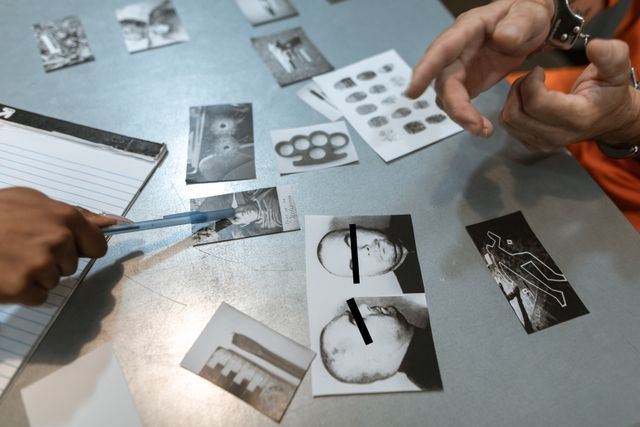

Some criminal investigations remain unresolved for years or even decades. Witnesses may be unable to identify a suspect, investigators may exhaust the available leads, and physical evidence collected at the crime scene may not produce conclusive results using the scientific methods available at the time. Such investigations are commonly known as cold cases. Although active investigative work may slow down, an unresolved case does not necessarily become impossible to solve. Advances in forensic science can create new opportunities to examine old evidence, challenge earlier assumptions and identify people who could not be identified when the crime occurred.
The transformation of forensic science has changed how investigators approach unsolved murders, sexual assaults, missing-person cases and unidentified human remains. More sensitive DNA analysis, improved fingerprint comparison, forensic genetic genealogy, digital evidence recovery and advanced imaging technologies can reveal information that earlier investigations could not establish. In some cases, evidence that once produced an inconclusive result can be examined again using newer methods.
However, forensic technology does not automatically solve a crime. Scientific findings must be interpreted alongside witness accounts, timelines, investigative records and other evidence. Investigators must also consider contamination, mistaken assumptions and the possibility that a scientifically valid result may have more than one explanation. The significance of forensic advances lies in their ability to reopen investigative possibilities, not in replacing careful detective work or the judicial process.
What Makes a Criminal Investigation a Cold Case?
A cold case is generally an unresolved criminal investigation in which conventional investigative avenues have been exhausted or have failed to establish sufficient evidence for a resolution. The precise definition varies between law-enforcement agencies, and a case may be reconsidered whenever new information or a promising investigative opportunity emerges.
Many cold cases involve crimes committed before modern forensic laboratories and digital investigative systems became widely available. Investigators working decades ago may have collected blood samples, clothing, fingerprints, hair, fibres or other materials without knowing that future technologies would make it possible to extract more information from them. Some evidence may have been preserved carefully but could not be analysed with the sensitivity or precision available today.
Other cases remain unsolved because the original investigation was limited by incomplete witness accounts, insufficient resources, poor documentation or the absence of a known suspect. A new forensic result can provide a fresh lead, but investigators must still establish how that result relates to the crime and whether it supports a legally sustainable case.
The passage of time creates additional difficulties. Witnesses may die or forget important details, physical evidence may deteriorate, and people connected to the investigation may relocate. Nevertheless, records, preserved exhibits and previously unexplored connections can remain valuable. The US National Institute of Justice explains that improvements in DNA technology have enabled laboratories to analyse some old, degraded or limited biological samples that previously produced inconclusive results.
DNA Technology: Turning Old Biological Evidence into New Leads
DNA analysis is among the most influential developments in modern cold-case investigations. Biological material recovered from a crime scene may contain DNA from a victim, a suspect or another person who came into contact with the material. When the sample is suitable and the circumstances are understood, DNA analysis can help investigators assess whether an individual may be associated with the evidence.
Earlier forensic methods sometimes required relatively substantial quantities of biological material. Older samples may also have been damaged by heat, moisture, microorganisms or unsuitable storage conditions. Modern laboratory techniques can sometimes recover useful genetic information from smaller or more degraded samples, allowing evidence to be reconsidered years after its collection.
Traditional forensic DNA profiling often examines specific genetic regions to compare a crime-scene profile with a reference sample or an authorised database. A match can provide a powerful investigative lead, especially when it connects evidence from an unsolved case with a known individual or another investigation. Investigators must still evaluate the statistical strength of the result, the possibility of contamination and the circumstances in which the biological material was deposited.
DNA can also help clear an innocent person. If a suspect was previously identified through an uncertain witness account, new testing may show that the available biological evidence is inconsistent with that person’s involvement. This ability to challenge earlier conclusions is one of the most important benefits of forensic science. A cold-case review should seek the truth rather than simply strengthen the original theory of the crime.
Forensic Genetic Genealogy: Finding Relationships Instead of Direct Matches
One of the more significant developments in some cold-case investigations is investigative genetic genealogy. This approach combines genetic analysis with genealogical research to identify possible biological relatives of an unknown person associated with crime-scene evidence.
Unlike conventional forensic DNA profiling, which commonly compares selected genetic markers, genetic genealogy may examine hundreds of thousands of genetic variations across a person’s genome. Researchers can compare the resulting profile with eligible genetic genealogy database information, where permitted, to identify possible relatives. Investigators may then use family records, historical documents and other independently verified information to narrow the field of potential identities.
The method received international attention when it contributed to identifying the suspect in the Golden State Killer investigation in the United States. The case demonstrated how genetic relationships, combined with traditional investigative work, could generate a lead in a series of crimes that had remained unresolved for decades.
The National Human Genome Research Institute explains how investigative genetic genealogy differs from conventional forensic DNA profiling. It also highlights privacy concerns arising when genetic information from people who are not themselves suspected of a crime may help identify a person under investigation.
Genetic genealogy generally produces leads rather than an automatic identification. A possible family relationship does not prove that a particular relative committed an offence. Investigators must establish the person’s identity through independent evidence and, where legally appropriate, seek a confirmatory forensic comparison. They must also comply with applicable rules governing genetic information, database use and privacy.
Fingerprint Analysis and the Re-Examination of Archived Evidence
Fingerprints have long been used to connect individuals with objects or locations. Yet the value of fingerprint evidence depends on the quality of the impression, the methods used to recover it and the analytical capabilities available to examiners.
Older investigations may contain fingerprint lifts, photographs or records that were not suitable for reliable comparison using the technology available at the time. Improvements in digital imaging and fingerprint identification systems can help examiners compare preserved impressions with larger collections of records. Better image processing may reveal features that were difficult to assess previously, although it cannot recreate detail that was never captured.
Automated fingerprint systems can generate potential candidates by comparing an impression with stored records. A trained examiner must assess the relevant features and determine whether the comparison supports an identification. An automated candidate list should not be treated as a definitive finding.
Fingerprint evidence can also be reviewed alongside DNA analysis. Research has explored whether biological material left during contact with a surface or archived fingerprint evidence can yield useful genetic information under certain conditions. The amount of recoverable DNA varies, and the presence of DNA does not necessarily establish when or why the material was deposited.
Re-examining archived fingerprints may therefore provide a new investigative direction, but the quality of the original evidence and the limitations of the comparison remain critical.
Digital Forensics: Recovering Clues from Devices and Records
Not every cold case depends on biological evidence. In many investigations, digital records may help reconstruct a person’s movements, communications or relationships at the time of a crime. Devices, computer files, photographs, archived messages and other electronic records can become relevant when investigators have a lawful basis to examine them and the data remain available.
Digital forensic techniques can sometimes recover deleted or inaccessible information from storage media. Investigators may also examine preserved records from service providers, historical transaction information, photographs and other material that helps establish a timeline. The availability of these records depends on how the information was stored, whether it has been preserved and the applicable legal and technical restrictions.
For example, an old missing-person investigation might be reopened when investigators discover previously unexamined communications or records that clarify the person’s last known movements. In another case, archived digital material might reveal a connection between individuals who were not linked during the original investigation. Such findings can provide new leads, but they must be authenticated and interpreted in context.
Digital evidence presents particular challenges because files can be modified, timestamps may be misleading, and accounts or devices may be shared. Investigators need to establish the origin and integrity of the data and determine whether the information can reliably be attributed to a particular person. A recovered message is not necessarily proof that its apparent sender wrote it, and a device’s location does not automatically establish the user’s precise movements.
The increasing availability of digital evidence has expanded the range of questions investigators can ask about older cases. Its greatest value emerges when it complements physical evidence and independently corroborated testimony.
Forensic Imaging and Modern Identification Techniques
Advances in imaging have also changed how investigators examine evidence and human remains. High-resolution photography, specialised scanning and modern medical imaging can provide information that was difficult to obtain through older methods. In death investigations, imaging may help specialists document skeletal injuries, examine internal structures or revisit earlier findings without relying exclusively on destructive examination.
Three-dimensional imaging can preserve detailed representations of bones, objects or relevant crime-scene features. These records may help specialists compare physical characteristics, assess possible injury patterns or review an earlier interpretation. The usefulness of any method depends on the available material and the scientific question being investigated.
Modern forensic anthropology and odontology can also contribute to identifying unidentified remains. Specialists may examine skeletal characteristics, dental records and other identifying features. When DNA analysis is possible, genetic findings can provide an additional means of establishing identity, particularly when conventional identification methods have failed.
Imaging technologies do not independently explain who committed a crime. Their role is to improve the documentation and interpretation of evidence so that investigators can develop or test hypotheses more accurately. The combination of imaging, laboratory analysis and traditional investigation can be particularly valuable when the original evidence was incomplete or difficult to interpret.
How Investigators Reopen and Reassess a Cold Case
Reopening a cold case usually begins with a systematic review of the original investigation. Detectives examine reports, witness statements, laboratory findings, photographs, evidence inventories and earlier investigative decisions. They identify what is known, what remains uncertain and whether any exhibits can be examined using methods unavailable during the original inquiry.
This review can reveal that a promising lead was never fully pursued, a witness was not re-interviewed or a laboratory result was inconclusive rather than definitively negative. Investigators may also discover that evidence collected from different cases could be related. Modern databases and improved information-sharing practices can help identify similarities between offences that were originally treated as separate incidents.
The next stage is to determine whether further forensic testing is appropriate. Not every exhibit should automatically be retested. Investigators and laboratory specialists need to consider the condition of the evidence, the original results, the likelihood of obtaining meaningful information and the risk that additional handling could consume or damage a limited sample.
A new result must then be integrated into the wider case. Investigators may interview witnesses again, verify historical timelines, examine a new suspect’s possible connection to the crime and look for independent evidence that supports or contradicts the forensic finding. Prosecutors may need to assess whether the evidence meets the relevant legal requirements, including any applicable rules about admissibility and the passage of time.
A case may be solved through this process, but it may also remain unresolved. Even then, modern testing can make the investigation more complete by documenting the evidence, excluding incorrect leads and preserving information for future examination.
Real-World Lessons from Long-Unsolved Cases
Cold-case breakthroughs illustrate how forensic advances can change an investigation without making scientific technology infallible. In the United States, genetic genealogy helped investigators identify a suspect in the Golden State Killer case after decades of unresolved crimes. The genetic lead was part of a broader investigation rather than a substitute for independent evidence and legal proceedings.
Other cold cases have been advanced through conventional DNA database comparisons. Biological evidence collected years earlier can sometimes be matched with a profile obtained later, generating a lead that did not exist when the original investigation began. Such cases demonstrate the importance of preserving evidence and making it available for lawful comparison as forensic capabilities improve.
The National Institute of Justice has also described how modern investigative methods can help identify previously unidentified victims and resolve related missing-person cases. Its account of the Cook County Sheriff’s Office’s review of unidentified victims connected to the John Wayne Gacy investigation shows how renewed examination of old records and remains can lead to further identifications.
These examples show that a breakthrough may involve identifying a suspect, identifying a victim, linking separate crimes or excluding an incorrect theory. A successful investigation is not defined solely by an arrest. It is defined by whether reliable evidence helps establish what happened.
Limitations, Privacy and the Risk of Wrongful Conclusions
Despite their benefits, forensic methods have important limitations. DNA samples can be mixed, degraded or contaminated. A profile may indicate that a person’s biological material was present without establishing when it arrived or whether it was connected to the offence. Fingerprint impressions may be incomplete, and digital records may be ambiguous or incorrectly attributed.
Investigators can also become vulnerable to confirmation bias when a new result appears to support a longstanding suspicion. To reduce this risk, forensic findings should be assessed using documented procedures, independent review where appropriate and consideration of alternative explanations. Laboratory methods must be validated, and the strengths and limitations of results should be communicated accurately.
Privacy is another significant concern, especially when investigations involve genetic genealogy or sensitive digital information. People who are not suspected of wrongdoing may become relevant because of their biological relationships or communications with others. Authorities must follow applicable laws and safeguards governing access, retention and use of such information.
The consequences of a mistaken identification can be severe. An incorrect conclusion may damage a person’s reputation, divert investigators from the actual offender or contribute to a wrongful conviction. Forensic advances should therefore be used to strengthen evidentiary accuracy, not to create an impression of certainty where the science does not support it.
Why Evidence Preservation and Investment in Cold Cases Matter
The possibility of future forensic analysis makes evidence preservation an essential part of criminal investigation. Biological samples, clothing, fingerprints, photographs and other exhibits should be stored under appropriate conditions, with records documenting their handling and transfer. Maintaining a reliable chain of custody helps establish that evidence has not been improperly altered, substituted or contaminated.
Preservation must be accompanied by proper documentation. Investigators need to know what was collected, where it came from, how it was handled and which tests have already been conducted. Without these details, even advanced laboratory methods may produce results that are difficult to interpret confidently.
Resources are equally important. Cold-case units need trained detectives, access to qualified laboratories, specialist expertise and sufficient time to review complex records. Collaboration between law-enforcement agencies can help identify links between cases, while cooperation with forensic scientists and prosecutors can clarify which investigative steps are most promising.
Regular reassessment is valuable because technology, databases and investigative knowledge continue to evolve. A case that cannot be solved today may become more accessible when a new testing method becomes available or a previously unidentified person is linked to relevant evidence. Continued investment ensures that unresolved cases do not become permanently neglected simply because earlier methods failed.
Conclusion: The Past Can Still Produce New Evidence
When a criminal case is solved years later, the breakthrough often results from a combination of scientific progress and renewed investigative attention. DNA analysis can extract useful information from some old samples, genetic genealogy can identify potential relatives, fingerprint systems can improve comparisons, and digital forensics can reveal records that clarify historical events. Modern imaging and identification methods can also help establish the identity of victims or revisit earlier findings.
However, technology alone cannot determine the full truth of a crime. Investigators must preserve evidence, validate scientific results, examine alternative explanations and connect forensic findings with reliable contextual evidence. They must also protect privacy, follow legal procedures and recognise that an arrest or investigative lead is not the same as a conviction.
Cold cases remind us that the absence of an answer is not necessarily the absence of evidence. As scientific methods improve and investigative records become more accessible, material collected years ago may acquire new significance. Continued review can provide answers to families, identify offenders, clear innocent people and strengthen confidence in the justice system. The ultimate purpose of forensic progress is not merely to solve old cases, but to make investigations more accurate, fair and accountable.
Online Internship with Certificate
You may be interested

Gold Smuggling Through Airports: How Investigators Trace Possible Links
Anshika Jain - Oct 22, 2026International airports are essential gateways for tourism, trade and global connectivity. Every day, thousands of passengers, airline employees, ground handlers, cargo workers and service providers move through…

Why Restrictions on Journalists Covering Protests Raise Questions About Press Freedom
Anshika Jain - Oct 22, 2026Public protests are among the most visible expressions of democratic participation. They provide citizens with an opportunity to challenge government decisions, demand accountability, raise concerns about injustice…
Political Allegations Versus Verified Evidence: How Readers Can Separate Claims from Facts
Anshika Jain - Oct 22, 2026Political allegations are a regular feature of democratic life. Politicians accuse opponents of corruption, parties question government decisions, public figures challenge official statistics, and social media users…
Most from this category

Voter List Revision in India: How Can Citizens Verify That Their Names Have Not Been Omitted?
Anshika Jain - Oct 22, 2026
Jantar Mantar Controversy: Can a Protest Site Be Restricted Without Limiting Democratic Expression?
Anshika Jain - Oct 22, 2026
Six Years of Arrest Delays: What the Delhi Court’s MCOCA Criticism Reveals
Anshika Jain - Oct 21, 2026

Voter List Revision in India: How Can Citizens Verify That Their Names Have Not Been Omitted?
Anshika Jain - Oct 22, 2026Jantar Mantar Controversy: Can a Protest Site Be Restricted Without Limiting Democratic Expression?
Anshika Jain - Oct 22, 2026Six Years of Arrest Delays: What the Delhi Court’s MCOCA Criticism Reveals
Anshika Jain - Oct 21, 2026