Can Synthetic Media Influence Elections? Challenges of Detecting Manipulated Political Content

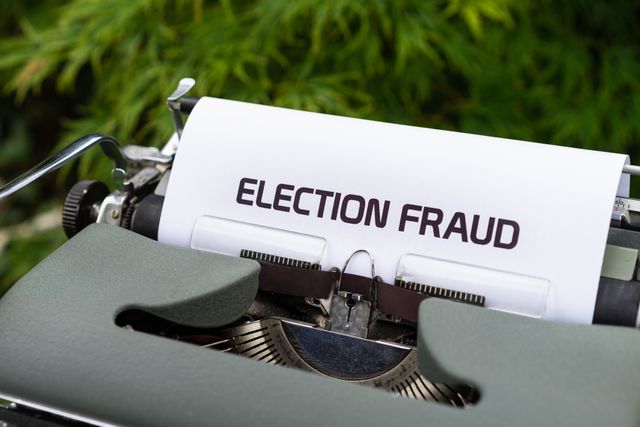

Elections depend on more than voting machines, polling stations, and ballot counting. They also depend on the information voters receive before making their decisions. Political speeches, interviews, campaign advertisements, news reports, and discussions on social media help citizens evaluate candidates and understand public issues. When this information environment becomes polluted with manipulated images, fabricated audio, and AI-generated videos, voters may find it increasingly difficult to distinguish genuine political communication from manufactured events.
Synthetic media refers to digital content that has been generated or significantly altered using artificial intelligence or other computational techniques. It includes realistic images of events that never occurred, cloned voices of political leaders, fabricated video statements, and manipulated recordings that appear to show candidates expressing opinions they never held. Although synthetic media can support legitimate activities such as accessibility, translation, satire, and creative campaigning, it can also be used to mislead voters, damage reputations, create confusion, or undermine confidence in democratic institutions.
The growing accessibility of generative AI has made producing convincing content easier than it was when advanced editing required specialised technical skills. A manipulated political recording can be created quickly, shared across multiple platforms, and presented without enough context for viewers to assess its authenticity. During an election campaign, even a short period of confusion may affect public discussion, force candidates to respond to fabricated allegations, or distract attention from substantive policy debates.
However, the relationship between synthetic media and election outcomes is more complicated than the claim that deepfakes automatically change votes. A fabricated video may influence perceptions without persuading everyone who sees it. Another may be exposed as fake almost immediately but still generate suspicion about the targeted candidate. Understanding these different effects is essential for evaluating the real threat and developing reliable methods to detect manipulated political content.
What Is Synthetic Media in Political Campaigning?
Synthetic media encompasses content created or modified through technologies such as generative artificial intelligence, voice cloning, face replacement, image synthesis, and advanced audio editing. In political communication, these tools can reproduce a candidate’s appearance or voice, generate fictional scenes, or alter an authentic recording so that it communicates a different message from the original.
A fabricated video might show a politician announcing an unexpected policy, making an inflammatory statement, or withdrawing from an election. A cloned voice could imitate a candidate asking supporters to stay home on polling day. An AI-generated image might falsely depict a public figure attending an event or meeting someone associated with a controversy. Each example creates a different verification challenge because the manipulation may affect the visual scene, spoken words, identity of the speaker, or context in which the content is presented.
Not all synthetic political media is deceptive. A campaign may use an AI-generated illustration, a translated voice-over, or a digitally created avatar to communicate information more efficiently. Satire and parody may also use manipulated depictions for commentary. The critical distinction is whether the content misrepresents reality, conceals material information about its synthetic nature, or is presented in a way that could reasonably mislead the audience.
The European Union’s guidance on digital-platform risks recognises that generative AI can be misused to create misleading synthetic text, images, audio, and video about political actors, election polls, and events. It also highlights the danger of fabricated information being used to influence voters or manipulate electoral processes.
This means the challenge is not simply to identify whether AI was used. It is to determine what the content claims, whether the claim is supported by evidence, whether the audience is being misled, and what consequences may follow from its circulation.
How Synthetic Media Can Influence Elections
Creating False Impressions About Political Candidates
One of the most direct risks is the creation of fabricated evidence that appears to reveal a candidate’s private views or public conduct. A realistic video can make an invented statement seem more credible than an ordinary text-based rumour because viewers may instinctively trust what they believe they can see and hear.
If a manipulated clip appears to show a candidate insulting a community, accepting a bribe, or endorsing an unpopular policy, it can trigger an immediate emotional reaction. Some viewers may share the clip before checking its source, while others may remember the allegation even after it is disproved. The content can therefore affect a candidate’s reputation independently of whether the audience ultimately believes every detail.
The risk becomes greater when the fabricated material appears consistent with an existing suspicion. Voters who already distrust a political figure may be more willing to accept an accusation that confirms their expectations. Supporters of the targeted candidate may dismiss the same material as a deliberate attack. Synthetic media can thus deepen existing divisions rather than persuade all audiences equally.
Spreading Confusion About Voting Procedures
Election manipulation does not always require attacking a candidate’s reputation. False information about polling dates, voting locations, eligibility requirements, or election procedures can interfere with the public’s ability to participate.
Synthetic videos and cloned voices can make fabricated announcements appear to come from election officials or trusted public figures. A convincing recording might falsely claim that voting has been postponed in a particular area or that certain voters must complete an additional procedure. If the information reaches people who cannot easily verify it, it may discourage participation or cause them to miss important deadlines.
Such content is especially concerning when distributed in local languages or through community messaging networks where the original source may be difficult to identify. The harm can occur even if only a small proportion of recipients act on the false information. The key risk is that voters may make practical decisions based on information that appears official but is not.
Amplifying Political Polarisation
Synthetic media can intensify existing social and political tensions by producing content designed to provoke anger, fear, humiliation, or outrage. A fabricated recording involving a sensitive religious, regional, economic, or cultural issue may spread rapidly because it appears to confirm a group’s concerns about its political opponents.
Once a manipulated clip enters a polarised information environment, people may interpret it through their existing loyalties. Supporters may circulate it as proof of wrongdoing, while opponents may respond with competing allegations. Even when the original fabrication is corrected, the resulting argument can continue across social platforms and private messaging groups.
The result may be a decline in shared factual understanding. Instead of debating policies using commonly accepted evidence, citizens may disagree about whether basic events occurred at all. This weakens the quality of public discussion and makes it harder for journalists, election officials, and fact-checkers to establish a reliable account of events.
Creating Doubt Even After a Fake Is Exposed
A particularly serious risk is that synthetic media can damage trust without convincing everyone that a specific fabrication is authentic. When people repeatedly encounter manipulated content, they may become less confident in genuine recordings as well. Politicians can also dismiss authentic evidence as AI-generated, creating uncertainty about material that is real.
Research published in 2026 examining political deepfakes in the United States and the Netherlands found that exposure to realistic political deepfakes reduced support for targeted political actors in the studied settings. Although participants generally rated the deepfakes as less credible than authentic videos, the negative effect on support proved resistant to correction. These findings do not establish that deepfakes always change election results, but they show why correcting a false claim may not fully reverse its impact.
This dynamic can create a broader credibility problem. If voters begin to believe that any inconvenient recording might be fabricated, genuine evidence of misconduct may become easier to dismiss. The threat therefore extends beyond individual fake videos to the reliability of political communication itself.
Why Detecting Manipulated Political Content Is So Difficult
Realistic Content Is Becoming Easier to Produce
Earlier forms of digital manipulation often contained visible inconsistencies, such as unnatural facial movements, mismatched lighting, distorted edges, or poor audio synchronisation. Modern generation tools can produce more convincing results, reducing the usefulness of simple visual checks.
Voice cloning creates a similar problem. A short audio sample may be sufficient for some systems to imitate a person’s voice, including its tone, rhythm, and pronunciation. A fabricated statement can then be combined with genuine background noise or a real recording of a political event, making it harder to assess the complete clip by listening alone.
Detection tools must also keep pace with changing generation methods. A system trained to recognise one type of manipulation may perform less effectively when confronted with content produced by a newer model or modified after generation. As creators adapt their methods, detection systems may need to be retrained and independently evaluated.
The Canadian Centre for Cyber Security reported in its 2025 update that generative AI had been used to create or spread synthetic disinformation campaigns targeting democratic processes. Its analysis identified 60 distinct campaigns across elections examined for the period covered by the report, including the use of AI-generated imagery, audio, and text to confuse or misinform voters. The report also cautioned that recorded incidents likely underestimate the total level of activity.
Detection Tools Can Produce False Results
AI detection systems do not provide a perfect answer to whether a piece of media is genuine. Some tools analyse facial movement, audio characteristics, compression patterns, or other signals associated with synthetic generation. Others examine inconsistencies across frames or compare a recording with known authentic material.
These methods can be useful, but a detector’s result should not be treated as conclusive proof. A genuine video that has been compressed, edited, subtitled, or recorded under unusual conditions may trigger a false alarm. Conversely, a carefully modified deepfake may avoid the signals a particular detector is designed to identify.
This creates a difficult balance. If platforms automatically remove every item flagged as suspicious, authentic political speech or legitimate criticism could be suppressed. If platforms ignore uncertain results, manipulated content may remain available long enough to cause substantial harm. Detection therefore needs to be combined with evidence-based verification, context assessment, and appropriate human review.
Missing Original Sources and Context
A viral clip often reaches viewers after being copied, cropped, subtitled, or re-uploaded several times. Each step can remove metadata and obscure where the recording originated. A genuine video can also be misleading when presented without the statement that preceded it, the explanation that followed it, or the circumstances in which it was recorded.
Fact-checkers must therefore examine more than the visible pixels or audible words. They need to establish the original source, identify the earliest available version, compare the clip with complete recordings, and seek independent evidence about the alleged event. If the recording claims to show a candidate at a particular location, authentic photographs, official schedules, or credible reporting may help establish whether the claim is plausible.
The absence of an original source does not prove that a video is fake. Similarly, finding a genuine source does not automatically establish that every version circulating online is unaltered or presented accurately. Verification requires examining both authenticity and context.
Content Can Spread Faster Than Verification
Election-related misinformation is particularly difficult to manage when it appears shortly before voting or during a rapidly developing political controversy. A fabricated announcement may reach thousands of people before journalists have obtained a response from the candidate or election authorities.
Corrections often require explanation, supporting evidence, and distribution through trusted channels. The original false content may need only a dramatic caption and a short clip to attract attention. Some people who encountered the original claim may never see the correction, while others may remember the allegation without remembering that it was disproved.
This difference in speed creates a structural disadvantage for verification. It also means that the effectiveness of a response depends on how quickly reliable information can be published and whether the correction reaches the same audiences as the original content.
How Can Manipulated Political Content Be Detected?
Examine the Source Before Sharing
The first step is to identify where a video, image, or audio recording came from. Voters should check whether the content was published by the candidate’s verified account, an official election authority, a reputable news organisation, or an unfamiliar account with no clear history. The account’s identity alone is not enough, since genuine accounts can be compromised and authentic material can be reposted with misleading captions.
The original upload is particularly valuable. A longer version of a speech, an unedited broadcast, or a complete press conference may reveal that a viral clip has been altered or stripped of context. Searching for the exact phrase used in a video, checking official statements, and comparing independent reports can help determine whether the alleged event actually occurred.
Cross-Check the Audio and Visual Evidence
A suspicious recording should be compared with other available evidence. Viewers can look for inconsistencies in lip movements, voice characteristics, lighting, facial expressions, reflections, background sounds, and transitions between frames. These clues may justify further investigation, but none should be treated as a definitive test on its own.
Reverse image search can sometimes identify earlier versions of a photograph or video frame. For audio, checking whether reputable outlets or the speaker’s official channels have published the same statement may help establish provenance. If a recording claims that a candidate made a major announcement, the absence of confirmation from credible sources may be a reason to delay sharing it rather than immediate proof that it is fabricated.
Use AI Detection Tools as Supporting Evidence
Automated detectors can help prioritise suspicious content for investigation, especially when election monitors must process large numbers of posts. Some systems assess the likelihood that an image or recording has been generated or manipulated, while others analyse patterns across text, audio, video, and user activity.
However, detection scores need to be interpreted cautiously. Different tools may produce conflicting results, and performance can vary with language, media quality, compression, and the generation method used. A detector should support a broader verification process, not replace it.
Election authorities, newsrooms, and platforms can improve reliability by combining automated screening with trained human analysts, independent fact-checkers, original-source searches, and clear documentation of how conclusions were reached. When evidence remains inconclusive, communicating uncertainty is more responsible than declaring a recording authentic or fake without adequate support.
Look for Provenance and Authenticity Signals
Digital provenance techniques aim to preserve information about a media file’s origin and editing history. Standards such as the Coalition for Content Provenance and Authenticity (C2PA) can support signed records that describe how content was created or modified. When correctly implemented and verified, such records can provide useful evidence about a file’s history.
Nevertheless, provenance information is not a universal solution. Many genuine recordings lack these credentials, particularly older material or content captured with devices that do not support the relevant standards. Metadata can also be lost when files are copied between platforms, and a provenance record does not independently prove that the statements shown in a recording are factually true.
Watermarks and labels can also help viewers recognise AI-generated content, but they are not foolproof. Some systems may not apply them, and some marks may be removed or damaged during editing. The most reliable approach combines technical signals with source verification, context, and independent evidence.
The Role of Social Media Platforms and Election Authorities
Social media platforms are central to the distribution of synthetic political content because they allow material to move quickly between public accounts, private groups, recommendation feeds, and messaging networks. Their responsibilities extend beyond identifying individual fake videos. They also need to consider how recommendation systems, advertising tools, coordinated accounts, and repeated reposting may amplify misleading material.
Platforms can develop procedures for reporting suspected deepfakes, prioritising election-related claims that could interfere with voting, labelling synthetic media where appropriate, and directing users towards authoritative information. They can also preserve relevant evidence for legitimate investigations, disclose the origins of political advertisements where required, and take action against coordinated manipulation in accordance with applicable laws and their policies.
However, moderation decisions must be transparent and proportionate. Political content can be satirical, critical, or genuinely newsworthy without being deceptive. Removing material simply because it criticises a candidate could harm freedom of expression, while leaving fabricated voting instructions online could undermine electoral participation. Effective policies must distinguish between misleading manipulation, legitimate commentary, and content whose authenticity remains uncertain.
Election authorities have an equally important role in communicating verified information about candidates, voting procedures, polling dates, and official announcements. In India, the Election Commission of India issued an advisory on 24 October 2025 reminding political parties of their responsibilities concerning synthetic and AI-altered campaign content, including clear labelling and disclosure requirements. The Commission also emphasised compliance with applicable election guidance and the Information Technology Rules.
In April 2026, the Election Commission reiterated that unlawful or misleading AI-generated and manipulated content brought to social media platforms’ attention should be acted upon within three hours. Political campaign material was also expected to carry clear labels and identify the originating entity. These measures illustrate how election authorities can establish practical expectations for transparency and rapid response, although enforcement and effectiveness depend on the circumstances and applicable rules.
What Recent Election Monitoring Reveals
The experience of recent election monitoring demonstrates why the threat should be assessed through evidence rather than assumptions. In its report on the May 2026 elections in England, the Electoral Commission described a pilot that processed approximately three million online posts. Human review identified 219 political deepfakes from 60 unique accounts, with the posts receiving millions of views and hundreds of thousands of likes, shares, or comments. Fifteen posts met the Commission’s threshold for posing a risk to electoral integrity, including false depictions of campaign activities, misleading candidate announcements, and inaccurate polling-day information. The Commission reported no evidence of deliberate use of highly convincing political deepfakes to target or interfere with those particular elections.
These findings are significant for two reasons. First, monitoring systems can identify suspicious political content at scale and help election authorities prioritise material that poses a credible risk. Second, the presence of deepfakes online does not automatically demonstrate that an election was manipulated or that voters changed their choices because of them.
The distinction between exposure, persuasion, and actual electoral impact is essential. A video may receive millions of views without changing voting behaviour. Another may reach a relatively small but strategically important audience and create confusion about polling arrangements. Measuring the effect of synthetic media requires examining its reach, timing, credibility, audience characteristics, and consequences, rather than relying on view counts alone.
Building a More Resilient Election Information Environment
No single technology can eliminate synthetic political disinformation. A sustainable response requires cooperation between election authorities, technology companies, journalists, researchers, political parties, and voters. Technical detection must be supported by trustworthy public communication, independent verification, clear platform procedures, and accountability for deliberate deception.
Media literacy is especially important because voters are often the final recipients of manipulated content. People should be encouraged to pause before sharing dramatic political recordings, particularly when a clip appears shortly before polling or contains an extraordinary allegation. Checking the original source and seeking independent confirmation can reduce the likelihood that an unverified recording will spread through personal networks.
Political parties also have a responsibility to avoid presenting fabricated material as genuine evidence against opponents. Transparent labelling can help audiences understand when synthetic media has been used, while prompt corrections can reduce the damage caused by mistakes. Parties should not assume that a misleading clip becomes acceptable simply because it was created for campaign communication rather than commercial advertising.
News organisations can strengthen public understanding by explaining how a recording was verified, what evidence supports their findings, and which questions remain unresolved. When an item cannot be conclusively authenticated, journalists should communicate that uncertainty clearly. Responsible reporting avoids amplifying a false allegation unnecessarily while still investigating content that may have genuine public significance.
Ultimately, democratic resilience depends on preserving the ability to establish shared facts. The goal is not to make voters suspicious of every image or recording. It is to give them reliable ways to assess evidence without allowing synthetic content to become an unquestioned source of political truth.
Conclusion
Synthetic media can influence elections by damaging candidates’ reputations, spreading false voting information, intensifying political divisions, and weakening confidence in authentic evidence. Its impact does not depend solely on whether a fabricated video convinces every viewer. In some cases, confusion, suspicion, and the persistence of an allegation after correction may be equally significant.
Detecting manipulated political content remains difficult because generative technologies continue to evolve, automated detectors can make mistakes, original sources may be unavailable, and viral content often spreads faster than verification. Watermarks, provenance standards, AI detection tools, and platform moderation can all contribute to the solution, but none is sufficient in isolation.
A reliable response combines technological safeguards with human judgement, independent journalism, transparent election procedures, and informed public participation. Political content should be assessed through evidence, context, and credible sourcing rather than appearance alone.
The central challenge is not simply to identify every deepfake. It is to build an election information environment in which fabricated content is less likely to mislead voters, corrections can reach affected audiences quickly, and genuine evidence remains credible. Protecting elections in the age of synthetic media ultimately requires both better detection technology and a stronger culture of verification.
Online Internship with Certificate
You may be interested
AI in Police Investigations: Automated Risk Scores Introduce Bias Into Law Enforcement
Anshika Jain - Oct 26, 2026Artificial intelligence is becoming an increasingly important part of modern law enforcement. Police departments and investigative agencies can use AI-powered tools to analyse large volumes of records,…

Who Is Liable When an AI System Makes a False Accusation?
Anshika Jain - Oct 26, 2026Artificial intelligence is increasingly being used to identify suspicious transactions, detect potential fraud, monitor workplace activity, evaluate job applicants, support law enforcement, and analyse online behaviour. These…

AI Voice Cloning Scams: How Can Families Verify an Emergency Call Before Sending Money?
Anshika Jain - Oct 26, 2026Imagine receiving a phone call from your child, sibling or parent. The voice sounds familiar, but the message is frightening: there has been an accident, someone is…
Most from this category

Climate Adaptation Beyond Disaster Relief: Prevention Budgets Matter for Public Infrastructure
Anshika Jain - Oct 26, 2026
Railway Safety in Landslide-Prone Regions: Role of Sensors and Early-Warning Systems
Anshika Jain - Oct 26, 2026

Women’s Safety After Dark: Why Street Design, Police Response Must Work Together
Anshika Jain - Oct 23, 2026
Climate Adaptation Beyond Disaster Relief: Prevention Budgets Matter for Public Infrastructure
Anshika Jain - Oct 26, 2026Railway Safety in Landslide-Prone Regions: Role of Sensors and Early-Warning Systems
Anshika Jain - Oct 26, 2026Why Do Heavy Rains Disrupt Transport Beyond the Monsoon Season?
Anshika Jain - Oct 23, 2026