

China’s Electric Vehicle Supply Chain Expansion: What Does It Mean for Indian Manufacturers

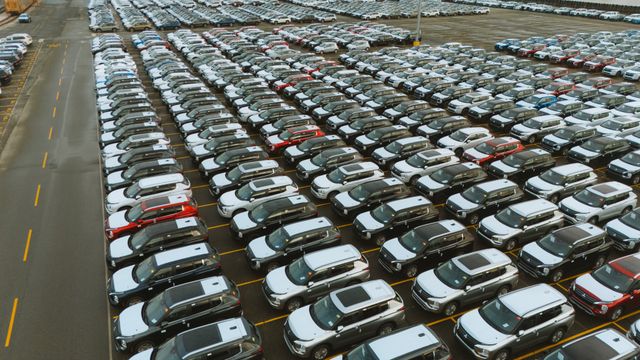

The global electric vehicle (EV) industry is undergoing a major transformation, and China has become one of its most influential players. Its advantage extends far beyond the production of affordable electric cars. China has developed an extensive manufacturing ecosystem covering battery cells, battery materials, electric motors, power electronics, charging equipment, software and other essential components. This integrated supply chain has helped Chinese manufacturers achieve production scale, reduce costs and expand into international markets.
As electric mobility adoption increases across Asia, Europe, Latin America and other emerging markets, Chinese companies are extending their influence through vehicle exports, overseas manufacturing facilities, technology partnerships and investments in component production. Their expansion is changing the competitive environment for established automotive companies as well as manufacturers in developing economies.
For India, this development presents both an opportunity and a strategic challenge. Indian manufacturers are working to establish domestic EV production capabilities, strengthen battery manufacturing, increase component localisation and reduce dependence on imported technology. However, China’s position in critical battery materials, processing, magnets and electronics means that Indian companies remain connected to Chinese supply chains even as they attempt to build independent manufacturing capacity.
The central question is no longer whether Chinese EV manufacturers will influence India’s automotive industry. Their influence is already visible in international competition, component sourcing and technology partnerships. The more important question is how Indian manufacturers can use this changing environment to develop stronger domestic capabilities without becoming excessively dependent on a single international supplier.
Understanding China’s Expanding EV Supply Chain
China’s EV supply chain is distinctive because several stages of manufacturing operate within a closely connected industrial ecosystem. Instead of depending entirely on international suppliers for essential components, Chinese manufacturers have developed significant domestic capabilities in battery production, mineral processing, electronics, motor manufacturing and vehicle assembly.
The battery industry is particularly important. Battery cells, cathode materials, anode materials, separators and electrolytes determine a substantial part of an electric vehicle’s cost and performance. China has developed large-scale manufacturing capacity across many of these stages, allowing companies to coordinate production and benefit from economies of scale.
According to the International Energy Agency’s 2026 analysis, China accounted for approximately 70% of global electric car production and more than 80% of battery cell production in 2025. It also represented around 85% of global cathode active material production and more than 90% of anode active material production. These figures demonstrate that China’s influence extends from finished vehicles to the materials and components required to manufacture them.
This concentration gives Chinese manufacturers several advantages. They can access established suppliers, purchase components in large quantities, coordinate production schedules and introduce new technologies at scale. The result is a manufacturing environment in which cost, production speed and supply-chain coordination can reinforce one another.
However, this concentration also creates international dependencies. Countries developing their own EV industries may manufacture vehicles domestically while continuing to import critical battery materials, electronic components and specialised equipment from China.
How Chinese Manufacturers Are Expanding Beyond Their Domestic Market
China’s international EV expansion is taking place through several interconnected strategies. Vehicle exports are one of the most visible channels, but overseas production and technology partnerships are equally important.
Chinese automakers have increased exports to emerging markets where demand for affordable electric vehicles is growing. These markets are attractive because their automotive industries are expanding, consumers are becoming more interested in lower running costs and governments are introducing policies to encourage electric mobility.
The IEA’s 2026 assessment highlights the scale of this shift. Chinese electric car exports increased by more than 120% year on year during the first half of 2026, while the share of electric vehicles in China’s car exports rose from approximately 35% in 2025 to more than 45% in the first half of 2026. The growth reflects the increasing importance of international markets to Chinese automakers.
Overseas manufacturing is another important part of the strategy. Instead of relying exclusively on exports from China, manufacturers can establish assembly facilities, form partnerships with local companies or develop component production in other countries. Such arrangements can help them serve regional markets, manage trade barriers and reduce logistics costs.
Southeast Asia has become an important destination for this activity. Chinese manufacturers have developed a substantial overseas vehicle manufacturing presence in the region, including facilities that can support both conventional and electric vehicle production. This expansion also creates opportunities for local suppliers to participate in the wider EV ecosystem.
Technology partnerships are another route to international growth. Chinese companies can provide vehicle platforms, battery expertise, powertrain systems and software capabilities to manufacturers in other markets. These arrangements allow Chinese technology to enter markets even when direct imports of complete vehicles face regulatory or political restrictions.
Why China’s Expansion Matters for Indian Manufacturers
India is developing its own EV manufacturing ecosystem, supported by growing domestic demand, industrial investment and government policies. Electric two-wheelers, three-wheelers, buses and passenger vehicles are creating opportunities for manufacturers across the value chain.
However, China’s expanding supply chain affects Indian companies in two different ways. It creates competition in finished vehicles and components, while also influencing the availability, pricing and technological development of the inputs required by Indian manufacturers.
The impact is particularly significant because India’s EV industry is still building several upstream capabilities. Domestic manufacturers have made progress in vehicle assembly, battery-pack production, wiring systems, structural components and selected powertrain technologies. Yet the production of advanced battery materials, semiconductors, specialised magnets and certain electronic components remains more challenging.
An analysis published by the Institute for Energy Economics and Financial Analysis and JMK Research in June 2026 found that several non-battery EV component categories could potentially reach 90–100% localisation by 2030 if announced manufacturing capacities are commissioned and operated as planned. However, it also identified automotive semiconductors, rare-earth magnets and specialised materials as important barriers to deeper domestic value creation.
This distinction is important. An electric vehicle assembled in India is not necessarily manufactured entirely through Indian supply chains. The vehicle may use locally produced body structures and wiring while relying on imported battery materials, chips or motor components. Consequently, the expansion of China’s supply chain can influence Indian manufacturers even when Chinese vehicles are not directly competing in the Indian market.
The Battery Manufacturing Challenge
Battery manufacturing is one of the most important areas where China’s expansion affects India’s automotive industry. Lithium-ion batteries are central to electric mobility because they influence vehicle range, charging speed, safety, performance and overall cost.
India has encouraged domestic battery manufacturing through industrial investment and production-linked incentive programmes. Companies are developing facilities for battery cells and packs, while established automotive groups are exploring partnerships to secure future supplies.
Nevertheless, domestic cell manufacturing does not automatically create a complete domestic battery ecosystem. Battery production requires a reliable supply of cathode and anode materials, electrolytes, separators, refined minerals and specialised production equipment. Several of these inputs are still imported, with China playing a major role in processing and supply.
This creates a potential vulnerability. If Chinese suppliers change export conditions, introduce licensing requirements or face production disruptions, Indian manufacturers may experience higher costs or delays. The Indian government acknowledged this concern in a March 2026 response on the impact of Chinese policy changes relating to lithium. The Ministry of Heavy Industries noted that India relies on imports for its lithium requirements and that Chinese export controls affecting certain high-performance batteries, cathode materials, artificial-graphite anodes and related technologies could tighten supply conditions.
The challenge is therefore not simply to manufacture battery cells locally. Indian companies must develop capabilities across the complete battery value chain, including material processing, chemical production, quality testing, recycling and advanced cell research.
Competition in Electric Motors, Magnets and Power Electronics
Batteries receive considerable attention in EV manufacturing discussions, but electric motors and power electronics are equally important to vehicle performance.
Electric motors convert electrical energy into mechanical movement. Their efficiency, weight, reliability and thermal characteristics influence vehicle range and driving performance. Many advanced motor designs use permanent magnets containing rare-earth elements, making the availability of specialised materials an important supply-chain consideration.
China has a strong position in several stages of rare-earth processing and magnet manufacturing. This creates a challenge for countries that depend on imported magnets for electric motors and other industrial applications.
India has experienced the consequences of supply disruptions in this area. In July 2026, Mint reported that electric truck and bus manufacturers were considering another extension of localisation exemptions because locally produced rare-earth magnets remained difficult to obtain. The report connected the difficulty to China’s earlier restrictions on magnet supplies.
Power electronics present another opportunity and challenge. Inverters, converters, motor controllers and vehicle control units manage the flow of electrical energy within an EV. These systems require advanced semiconductors, sensors and specialised electronic components.
Indian manufacturers can develop domestic capabilities in motor assemblies, control systems and power electronics. However, deeper localisation requires investment in semiconductor supply chains, precision manufacturing, testing infrastructure and engineering expertise. Without these capabilities, domestic production may continue to depend on imported subcomponents.
Chinese Technology Partnerships: Competition and Opportunity
Although direct market access for Chinese automakers in India has faced regulatory and political constraints, Chinese technology can still influence the Indian automotive industry through partnerships, licensing and component supply arrangements.
Such collaborations can provide Indian manufacturers with access to established vehicle platforms, engineering knowledge, battery technologies and manufacturing processes. They may also reduce the time and investment required to develop new EV products independently.
A Reuters report published in June 2026 described how Chinese EV technology was entering India through supply and licensing arrangements despite restrictions affecting direct participation by Chinese automakers. It highlighted partnerships involving Chery technology and Indian automotive companies, including reported plans to adapt vehicle platforms for the Indian market. The report also discussed the regulatory and geopolitical difficulties that can affect such collaborations.
For Indian manufacturers, these arrangements create an opportunity to accelerate product development. Developing an EV platform from the beginning requires significant research, testing, capital and engineering resources. Access to an established platform can help companies shorten development timelines and concentrate their investment on localisation, vehicle design, customer experience and manufacturing.
However, technology partnerships also require careful evaluation. Companies must understand intellectual property arrangements, software access, data ownership, technology transfer conditions and the availability of replacement components. A partnership that reduces initial development costs could create long-term dependency if the Indian company cannot independently maintain or modify critical systems.
The objective should therefore be technology access combined with domestic capability development, rather than dependence on imported designs alone.
Opportunities for Indian Component Manufacturers
China’s expansion can create new opportunities for Indian manufacturers, particularly those willing to specialise in components and systems that international automakers need.
India already has an established automotive supplier ecosystem. Companies manufacture tyres, wiring harnesses, metal components, suspension systems, braking systems, seating systems and other parts for conventional vehicles. Many of these capabilities can be adapted for electric vehicles, although EV production introduces new technical requirements.
Manufacturers can expand into battery enclosures, thermal management systems, charging equipment, power distribution units, motor housings, vehicle control systems and high-voltage wiring. These categories offer opportunities to serve domestic automakers as well as international companies seeking alternative suppliers.
The June 2026 IEEFA and JMK Research analysis identified powertrain systems, power electronics, thermal systems, chargers and control units as important areas for localisation. It suggested that several non-battery component categories could approach very high domestic production levels by 2030 if announced investments are successfully implemented.
Small and medium-sized enterprises can also participate in this transition. They may not have the resources to manufacture battery cells or advanced semiconductors, but they can specialise in precision components, industrial tooling, connectors, cooling systems, testing equipment and manufacturing services.
To benefit, suppliers will need to meet the quality, traceability, safety and production standards required by EV manufacturers. They must also invest in technical training and develop the ability to manufacture components consistently at competitive prices.
How China’s Cost Advantage Could Affect Indian Automakers
Chinese manufacturers benefit from large production volumes, established supplier networks and extensive industrial infrastructure. These factors can reduce the cost of components and finished vehicles.
The IEA’s 2026 analysis notes that Chinese manufacturers benefit from integrated supply chains and production costs estimated to be around 35% lower than those in advanced economies. Although this comparison does not directly measure the cost difference between Chinese and Indian manufacturers, it illustrates the scale advantages that Chinese companies have developed.
For Indian automakers, this creates pressure to improve manufacturing efficiency. If imported EVs or components are available at lower prices, domestic companies may find it difficult to compete solely through local assembly.
However, cost competitiveness does not depend only on labour expenses or the price of imported materials. It also depends on production yield, automation, supplier reliability, energy costs, manufacturing scale, logistics and the ability to reduce defects.
Indian manufacturers can improve their position by increasing production volumes, standardising components across vehicle models, strengthening supplier relationships and investing in automation. Better battery management systems, efficient motor designs and improved vehicle software can also help reduce total ownership costs.
The long-term objective should be to develop an EV manufacturing ecosystem that competes through efficiency, reliability and innovation rather than relying primarily on import protection.
India’s Policy Response and the Localisation Agenda
India has introduced several policy measures to encourage domestic EV manufacturing and reduce dependence on imported components. These include production-linked incentives, support for battery manufacturing, incentives for electric mobility adoption and localisation requirements under selected programmes.
The Production-Linked Incentive scheme for the automobile and auto-component industry aims to encourage investment in advanced automotive technologies, including electric vehicle systems. The Advanced Chemistry Cell battery programme is intended to support domestic battery manufacturing capacity.
The PM E-DRIVE scheme also supports electric mobility adoption and domestic manufacturing through its incentive framework. However, localisation requirements can become difficult to meet when critical components are not available from domestic suppliers. The rare-earth magnet supply problem reported in 2026 illustrates how international supply disruptions can affect the implementation of domestic manufacturing targets.
Policy design must therefore balance two objectives. India needs to encourage domestic production, but it must also ensure that manufacturers can access essential inputs during the transition. Restricting imports before reliable domestic alternatives become available could increase production costs and slow EV adoption.
A stronger approach would combine predictable incentives with investment in upstream industries, research institutions, technical training and international supply-chain partnerships. Support should also encourage actual domestic value addition rather than rewarding assembly operations that continue to depend heavily on imported subcomponents.
Supply Chain Diversification: Why Indian Manufacturers Need Multiple Sources
China’s position in the EV supply chain demonstrates the advantages of industrial concentration, but it also reveals the risks of relying heavily on one country for critical inputs.
Indian automakers have started exploring alternative battery suppliers and sourcing arrangements. A March 2026 Mint report described efforts by major manufacturers, including Mahindra, Tata Motors Passenger Vehicles and Hyundai Motor India, to secure battery-cell supplies through alternative domestic and international sources. The report also discussed emerging domestic cell-manufacturing projects and the need to reduce exposure to supply disruptions.
Diversification does not mean completely eliminating Chinese suppliers. Such a transition would be difficult because China has a highly developed industrial ecosystem and remains important to global battery production. Instead, Indian companies should identify components where dependence creates the greatest operational risk and gradually develop alternative sources.
Potential sourcing partners include manufacturers in Japan, South Korea, Europe and other emerging industrial economies. Domestic suppliers can also become part of this strategy as Indian production capacity improves.
Companies should evaluate suppliers based on price, quality, delivery reliability, technical compatibility, financial stability and geopolitical exposure. Maintaining alternative suppliers for critical components can help reduce the impact of sudden export restrictions or transportation disruptions.
Research, Innovation and Skill Development
A competitive EV industry requires more than manufacturing capacity. It needs engineers, material scientists, battery researchers, electronics specialists, software developers and technicians who understand the technical requirements of electric mobility.
Indian manufacturers must invest in research and development to improve battery chemistry, energy density, thermal management, charging performance, motor efficiency and vehicle software. Research into battery recycling and material recovery is particularly important because it can reduce dependence on imported raw materials over time.
Universities, research institutions and industrial laboratories can support this process by working with automotive companies on practical engineering challenges. Collaboration can help convert academic research into commercially useful products, testing methods and manufacturing processes.
Workforce development is equally important. Employees trained in conventional automotive production may require additional skills in high-voltage systems, battery safety, electronic diagnostics, power electronics and software-based vehicle maintenance.
The growth of China’s EV supply chain makes this need more urgent. Indian manufacturers cannot compete only by purchasing advanced components from international suppliers. They must develop the expertise required to design, test, manufacture and improve those components themselves.
Risks of Overdependence on Imported Technology
International partnerships and imports can accelerate the growth of India’s EV industry, but they also create long-term risks if domestic capabilities remain underdeveloped.
One major concern is technology dependency. If Indian manufacturers rely on foreign suppliers for battery management systems, vehicle software, power electronics and diagnostic tools, they may have limited control over future upgrades and maintenance.
Another concern involves intellectual property and data security. Connected electric vehicles generate information about vehicle performance, charging patterns, driver behaviour and maintenance requirements. Manufacturers must establish clear arrangements concerning data access, storage, cybersecurity and software updates.
Supply interruptions can also affect production planning. If a critical component is available from only one supplier or country, even a temporary export restriction can delay vehicle manufacturing.
These risks do not mean that international cooperation should be avoided. Instead, partnerships should include appropriate technology-transfer provisions, local engineering participation, supplier diversification and plans for domestic production wherever commercially and technically feasible.
What the Expansion Means for India’s Automotive Future
China’s expanding EV supply chain is likely to influence India’s automotive industry in several ways. Competition in finished vehicles may increase, component prices and availability may change, and international manufacturers may seek new production locations and technology partners.
For Indian companies, the most significant opportunity lies in moving beyond vehicle assembly towards deeper participation in the EV value chain. Battery materials, motors, power electronics, charging systems, thermal management and advanced automotive software can become important areas of domestic industrial development.
India also has an opportunity to become a manufacturing and export base for selected EV components. Its existing automotive supplier network, engineering workforce and growing domestic market provide a foundation for this development. However, success will depend on investment quality, infrastructure, technical capabilities and consistent policy implementation.
The country should not attempt to reproduce every part of China’s industrial model immediately. Instead, it can identify strategic segments where it has a realistic opportunity to build competitive capabilities. These may include selected battery technologies, vehicle electronics, powertrain systems, charging infrastructure, lightweight materials and recycling technologies.
Conclusion
China’s electric vehicle supply chain expansion is reshaping global automotive competition by extending its influence across vehicle exports, battery production, component manufacturing, technology partnerships and overseas industrial investment. Its integrated manufacturing ecosystem offers substantial cost and scale advantages, but it also creates supply-chain dependencies for countries that rely on Chinese materials and components.
For Indian manufacturers, this development represents both a competitive challenge and an opportunity to strengthen domestic industrial capabilities. India has made progress in EV assembly and component localisation, but important gaps remain in battery materials, semiconductors, rare-earth magnets and advanced electronics.
The next stage of India’s EV development must focus on deeper domestic value creation, reliable alternative sourcing, research and development, skilled workforce development and strategic international partnerships. Localisation targets should be supported by actual manufacturing capacity rather than limited to final assembly.
China’s expansion does not make India’s EV manufacturing ambitions less achievable. Instead, it highlights the importance of building a resilient, technologically capable and cost-competitive industrial ecosystem. Indian manufacturers that combine domestic innovation with carefully managed international cooperation will be better positioned to compete in the evolving global electric mobility market.
Online Internship with Certificate
You may be interested

Are Indian Consumers Losing Trust in Online Product Reviews
Anshika Jain - Nov 13, 2026Online shopping has transformed the way Indian consumers discover, compare and purchase products. Smartphones, household appliances, clothing, personal care products, electronics and even everyday groceries can now…
Rising Cost of Urban Living: Rent and Transport Are Reshaping Household Budgets
Anshika Jain - Nov 13, 2026Urban India offers access to employment, education, healthcare, professional opportunities and modern infrastructure. Cities attract students, working professionals, entrepreneurs and families looking for better economic prospects. However,…
E-Waste After the Festive Shopping Season: Is India’s Recycling Infrastructure Ready
Anshika Jain - Nov 13, 2026India's festive shopping season brings a significant increase in consumer spending on electronic products. During Diwali and other major celebrations, households purchase smartphones, televisions, refrigerators, washing machines,…
Most from this category

Why Are Indian Graduates Finding It Difficult to Convert AI Skills Into Jobs
Anshika Jain - Nov 13, 2026
India’s Internship Economy: Are Unpaid Internships Creating New Barriers for Students
Anshika Jain - Nov 13, 2026

Winter Health Preparedness in India: Are Hospitals Ready for Seasonal Disease Surges
Anshika Jain - Nov 13, 2026
Why Are Indian Graduates Finding It Difficult to Convert AI Skills Into Jobs
Anshika Jain - Nov 13, 2026India’s Internship Economy: Are Unpaid Internships Creating New Barriers for Students
Anshika Jain - Nov 13, 2026November Education Admission Rush: Students Getting Enough Information
Anshika Jain - Nov 13, 2026