Israel’s Election and Coalition Uncertainty: No Political Bloc Secures a Majority

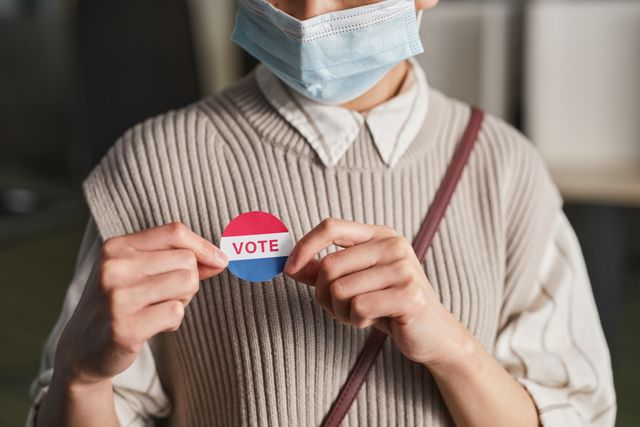

Elections are generally expected to produce a political mandate that allows a winning party or coalition to form a government and implement its programme. However, in parliamentary democracies with multiple political parties, voters do not always deliver a clear majority to a single political bloc. When competing alliances secure substantial but insufficient parliamentary representation, the election result can create a period of political uncertainty in which negotiations become as important as the voting process itself.
Israel’s October 27, 2026, general election has created precisely this situation. The results left Prime Minister Benjamin Netanyahu’s political bloc without a parliamentary majority, but the parties opposing him also failed to secure enough seats to form a government independently. The final distribution of seats has made the Arab-led parties particularly important, creating difficult political choices for both major camps. The country now faces weeks of negotiations involving possible coalition partnerships, minority government arrangements and the possibility of another election.
This political deadlock is significant because Israel has experienced repeated periods of coalition instability in recent years. The current uncertainty also comes after the Hamas-led attacks of October 7, 2023, the subsequent wars and continuing disagreements over national security, military service, judicial reform and the future of the country’s political leadership.
The central question is no longer simply which party received the most votes. It is whether parties with different political priorities can negotiate a workable governing arrangement. Understanding this situation requires examining Israel’s parliamentary system, the distribution of seats, the role of smaller parties and the consequences of prolonged coalition negotiations.
What Happened in Israel’s 2026 General Election?
Israel held its general election on October 27, 2026, in a political environment shaped by security concerns, public dissatisfaction and deep divisions over the government’s direction. The election was widely viewed as a major test of Benjamin Netanyahu’s political leadership following years of conflict and domestic controversy.
The final results produced a fragmented 120-member Knesset, Israel’s parliament. Netanyahu’s pro-government bloc secured 53 seats, while the Jewish-led opposition bloc associated with former military chief Gadi Eisenkot won 48 seats. The two Arab-led parties collectively secured 19 seats, leaving neither of the two principal political camps with the 61 seats required for a parliamentary majority.
The results demonstrate the difference between winning an election in terms of political momentum and securing the parliamentary numbers needed to govern. Netanyahu’s Likud party emerged as the largest individual party, but its wider alliance remained short of a majority. Eisenkot’s opposition also faces a difficult challenge because its potential partners have different positions on cooperation with Arab-led parties.
The Arab-led parties, particularly the Joint List and Ra’am, have therefore become central to discussions about the next government. Their combined representation could provide the parliamentary support needed for an alternative coalition, but political disagreements make that possibility complicated.
Understanding Israel’s Parliamentary Coalition System
Israel operates under a parliamentary system in which voters elect representatives to the Knesset through proportional representation. The country is treated as a single nationwide electoral constituency, and parliamentary seats are allocated to political lists according to their share of the vote, subject to the electoral threshold.
Unlike a presidential system, where the head of government may be elected separately from the legislature, Israel’s prime minister must lead a government capable of maintaining parliamentary support. A political party does not automatically gain the right to govern simply because it wins the largest number of seats.
The Knesset contains 120 members, making 61 seats the standard threshold for an absolute majority. Parties frequently contest elections independently but negotiate with other political groups after the results are announced. These negotiations determine which parties will join the governing coalition, what policies the government will prioritise and how ministerial responsibilities will be distributed.
This arrangement allows smaller parties to exercise considerable influence. A party with only a handful of parliamentary seats may become essential to a coalition’s survival if the larger parties cannot reach 61 seats without it.
Coalition governments can therefore represent a broad range of political positions. However, this diversity can also create disagreements over budgets, security policy, religious matters, judicial reform and other major decisions. A government may have enough seats to take office but still struggle to maintain agreement among its partners.
Why Neither Political Bloc Secured a Clear Majority
Netanyahu’s Coalition Faces a Political Setback
The election weakened Netanyahu’s existing governing alliance. His bloc secured 53 seats, eight short of the majority threshold. The result reflects dissatisfaction among sections of the electorate over the government’s record, security policy, political leadership and disagreements concerning military-service exemptions for ultra-Orthodox communities.
Netanyahu’s supporters have defended his leadership by pointing to the country’s security challenges and his experience managing periods of conflict. Critics, however, have argued that the government must answer questions about security failures, accountability and the direction of national policy.
The election has also exposed the difficulty of maintaining an alliance involving parties with strong ideological positions. Far-right and ultra-Orthodox parties have played important roles in Netanyahu’s previous governments, but their demands may limit his ability to attract centrist or opposition politicians.
Although his bloc lacks a majority, Netanyahu remains politically relevant because Likud is the largest individual party and he has considerable experience in coalition negotiations. He could attempt to attract defectors from rival parties or negotiate a new partnership with political groups that are not currently aligned with him.
The Opposition Has Numbers but Not a Unified Strategy
The opposition faces a different problem. Its Jewish-led parties secured 48 seats, and their combined position with the Arab-led parties could potentially create a parliamentary majority.
However, the opposition is not a single political organisation. It includes parties with different economic, security, religious and national policy priorities. Some leaders have also previously ruled out forming a government dependent on Arab-led parties, making the parliamentary arithmetic difficult to translate into a practical coalition.
Gadi Eisenkot has presented himself as an alternative to Netanyahu, but he must convince parties with different political positions to cooperate. The question is whether these parties are willing to reconsider their campaign commitments in order to replace the existing government.
This creates an unusual situation in which a political bloc may have enough potential parliamentary support to form a government but lack the internal agreement required to do so.
Why Arab-Led Parties Have Become Potential Kingmakers
One of the most important features of the 2026 election is the representation secured by Israel’s Arab-led political parties. The Joint List won 11 seats, while Ra’am secured eight, giving them a combined total of 19 seats. Their representation makes them potentially decisive in determining which political camp can assemble a majority.
The political importance of these parties extends beyond their seat count. They represent a substantial section of Israel’s Arab citizens and bring issues such as equality, public services, housing, employment, community safety and minority rights into parliamentary negotiations.
For the opposition, cooperation with these parties could provide a path to an alternative government. However, the arrangement is politically sensitive. Some opposition leaders have previously rejected formal partnerships with Arab-led parties, while Netanyahu has strongly criticised the prospect of relying on their support.
There is also a distinction between joining a governing coalition and providing external parliamentary support. An Arab-led party could potentially support a government on confidence votes or selected legislation without taking ministerial positions or formally becoming part of the coalition.
This arrangement could make a minority government possible, but it would require political compromises and an understanding of which issues could receive support. It would also leave the government vulnerable if important parliamentary votes exposed disagreements among its supporters.
The debate illustrates a wider democratic question: how should political parties balance campaign promises, ideological positions and the parliamentary arithmetic required to form a functioning government?
What Happens When No Political Bloc Can Form a Majority?
Israel’s coalition formation process follows constitutional and parliamentary procedures. The president plays an important role in identifying a candidate who has the best chance of forming a government.
Following the certification of election results, President Isaac Herzog consults political representatives and considers which candidate is most likely to obtain sufficient parliamentary support. The president then gives a member of the incoming Knesset the opportunity to form a government.
According to the current post-election timetable, the results are due to be formally certified and presented to the president by November 4, while the new Knesset is scheduled to be sworn in on November 10. The candidate selected to form a government will initially have 28 days, with the possibility of a 14-day extension.
If the first candidate fails, another Knesset member may be given the opportunity. Further parliamentary procedures can follow if the second attempt is unsuccessful. If no viable government emerges within the prescribed process, the Knesset can be dissolved and another election may be required.
Until a new government is formed, Netanyahu continues as caretaker prime minister. This means that an inconclusive election does not automatically remove the incumbent government from office. Instead, the existing administration remains responsible for governing during the transition, subject to the legal and political constraints associated with caretaker arrangements.
This process is designed to prevent an immediate administrative vacuum. However, a prolonged transition can still create uncertainty around major policy decisions, appointments, budgets and long-term planning.
Four Possible Political Outcomes for Israel
A Unity Government Between Rival Political Camps
One possible outcome is a national unity government involving Likud and selected opposition parties. Such an arrangement could bring together political groups that disagree on many issues but share an interest in establishing a stable administration.
A unity government might be presented as a way to address national security, economic pressure and institutional uncertainty. Reuters reported that a potential arrangement involving Likud, Eisenkot’s Yashar party and other centrist or right-leaning opposition groups could reach approximately 66 seats.
However, this possibility faces serious political obstacles. Opposition leaders campaigned on replacing Netanyahu, and joining a government led by him could damage their credibility with voters. Netanyahu would also face pressure from his existing far-right and ultra-Orthodox allies if he abandoned them to form a broader coalition.
A unity government could provide numerical stability, but its long-term success would depend on whether its members could agree on major policy questions and establish clear rules for decision-making.
An Opposition-Led Minority Government
A second possibility is an opposition government led by Eisenkot and supported by Arab-led parties from outside the formal coalition.
The opposition’s 48 seats, combined with the 19 seats held by Arab-led parties, would provide a potential parliamentary base of 67 seats. This could create a route to government without requiring every supporting party to accept ministerial responsibilities.
However, external support is not the same as a stable coalition. The government would need to negotiate support for budgets, confidence votes and important legislation. Disagreements over security, Palestinian policy and other national issues could create serious challenges.
The political reaction would also matter. Some voters and political groups may oppose a government that depends on Arab-led parliamentary support, even if it follows democratic procedures.
Netanyahu Rebuilds a Right-Wing Majority
Netanyahu could also attempt to secure additional support from parties or individual lawmakers outside his current bloc. His experience in coalition politics may help him negotiate with politicians who are reluctant to join an opposition-led administration.
This strategy would require convincing other parties that joining or supporting a Netanyahu government offers greater political advantages than remaining with the opposition. It could involve ministerial positions, policy concessions or agreements on issues such as military-service legislation.
However, attracting opposition lawmakers may be difficult, particularly when several parties have made Netanyahu’s removal a central part of their political campaign. The success of this approach would depend on whether divisions within the opposition become more significant than their shared opposition to the incumbent prime minister.
Another General Election
If negotiations fail and no candidate can assemble a viable government, Israel could face another election. This would return the decision to voters, but it would not necessarily solve the underlying political divisions.
A new election might change the distribution of seats, strengthen a particular party or create opportunities for new political alliances. However, voters could also produce another fragmented parliament with similar coalition difficulties.
Israel has experienced repeated elections during previous periods of political deadlock. Between 2019 and 2022, the country held five national elections, illustrating how prolonged political fragmentation can prevent stable government formation.
Another election would also require public spending, campaign activity and additional time before a stable administration could take shape.
How Political Deadlock Could Affect Israel’s Economy
Political uncertainty can influence economic confidence even before a new government is officially formed. Businesses, investors and international partners often look for predictable policies, stable budgets and clear government priorities.
When coalition negotiations continue for weeks or months, decisions involving infrastructure, taxation, public expenditure and regulatory changes may become more difficult. Businesses may delay investment plans if they are uncertain about future economic policies. International investors may also examine whether political instability could affect fiscal management or long-term commitments.
Israel’s economy faces additional pressures arising from prolonged regional conflict, defence spending, labour-market disruption and the financial consequences of security operations. A government without a clear parliamentary mandate may find it harder to establish agreement on spending priorities or introduce politically sensitive reforms.
However, political uncertainty does not automatically lead to an economic crisis. Existing institutions, financial regulators, the central bank and public administration continue to operate. The extent of the economic impact depends on the length of the deadlock, the performance of existing institutions and the decisions made by the caretaker government.
The main concern is whether political negotiations prevent the country from addressing economic challenges that require sustained planning.
Implications for National Security and Foreign Policy
Israel’s coalition negotiations are taking place in a particularly sensitive security environment. The country continues to face regional tensions and the political consequences of the conflicts that followed the October 7, 2023, attacks.
A prolonged transition could complicate decisions involving defence spending, military policy, regional diplomacy and relations with international partners. Although a caretaker government remains in office, major strategic decisions may become politically more difficult when its future parliamentary support is uncertain.
Foreign governments will also be watching the coalition negotiations closely. The next administration’s approach to the United States, regional states, the Palestinian question and international diplomatic initiatives could influence Israel’s external relationships.
The election has also been shaped by disagreements over military-service exemptions for ultra-Orthodox communities. This issue has become an important dividing line because it connects national security responsibilities with religious identity, political representation and the distribution of civic obligations.
The next government will need to address these disagreements while maintaining the country’s security capabilities. Whether a broad coalition or a narrower government can manage these issues effectively remains uncertain.
What the Election Reveals About Israeli Democracy
The 2026 election highlights both the strengths and the challenges of proportional parliamentary democracy. A fragmented parliament ensures that multiple political groups can gain representation, including smaller parties and minority communities. However, it also makes government formation dependent on negotiations between organisations that may have sharply conflicting priorities.
The election demonstrates that winning the largest number of seats is not the same as securing the authority to govern. Political leadership requires the ability to build alliances, negotiate policy compromises and maintain parliamentary confidence.
The growing representation of Arab-led parties also raises questions about political inclusion. Their participation in government negotiations could expand the range of communities represented in national decision-making. At the same time, resistance to such cooperation exposes the continuing divisions within Israeli society.
Ultimately, the stability of a parliamentary democracy depends not only on election procedures but also on the willingness of political leaders to respect electoral outcomes and work within constitutional institutions.
Conclusion
Israel’s October 2026 general election has created a complicated political situation in which neither the Netanyahu bloc nor the Jewish-led opposition secured the 61 seats required to govern independently. The Arab-led parties now hold a potentially decisive position, while President Isaac Herzog must oversee the process of identifying a candidate capable of forming a government.
The possible outcomes include a unity government, an opposition-led minority administration, a reconstructed right-wing coalition or another general election. Each option involves political compromises and carries different implications for governance, national security, economic planning and democratic representation.
The immediate challenge is to translate the election results into a functioning administration without allowing political negotiations to become an indefinite source of uncertainty. A government needs more than parliamentary numbers. It also needs sufficient agreement among its partners to pass legislation, manage public resources and respond to national challenges.
Israel’s current political deadlock therefore offers a wider lesson about parliamentary democracy: when no political bloc secures a clear majority, the ability to negotiate becomes as important as the ability to win votes. The success of the next government will depend on whether competing political interests can find enough common ground to govern a deeply divided country.
Online Internship with Certificate
You may be interested

Climate Change as a Health Emergency: Researchers Calling for Global Health Action?
Anshika Jain - Nov 02, 2026Climate change is increasingly being recognised as more than an environmental or economic challenge. Its effects are becoming visible in hospitals, communities, agricultural regions and public health…

Rising Commodity Costs: How Do Supply Disruptions Reach Household Budgets?
Anshika Jain - Nov 02, 2026The price of everyday goods is influenced by events that often take place thousands of kilometres away from the people who eventually pay for them. A conflict…
Possible US–Iran Escalation: How Do Military Warnings Affect Regional Stability?
Anshika Jain - Nov 02, 2026Relations between the United States and Iran remain one of the most consequential sources of uncertainty in international security. Their disagreements extend beyond military competition and diplomatic…
Most from this category
Middle East Tensions and Oil Prices: Diplomatic Signals Change Global Energy Markets?
Anshika Jain - Nov 02, 2026



Middle East Tensions and Oil Prices: Diplomatic Signals Change Global Energy Markets?
Anshika Jain - Nov 02, 2026Spain’s Deadly Train Collision: Rail Networks Investing in Maintenance
Anshika Jain - Nov 02, 2026Overtourism and Mountain Infrastructure: India’s Tourist Destinations
Anshika Jain - Oct 30, 2026