

When a Celebrity Becomes Part of a Regulatory Investigation: What Happens Next?



Celebrity endorsements are among the most powerful forms of modern advertising. A familiar actor, sportsperson, musician or social-media personality can transform an ordinary commercial into a campaign capable of reaching millions of people. The commercial value of celebrity influence is precisely why companies invest heavily in well-known personalities. However, the relationship becomes considerably more complicated when the advertisement attracts the attention of a government regulator.
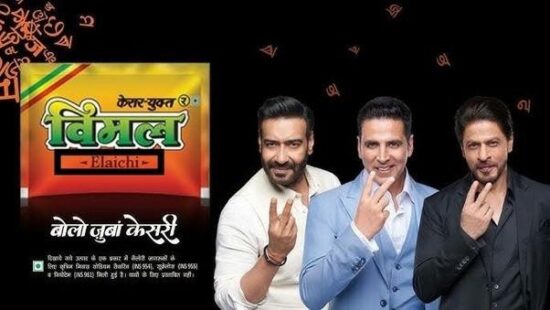
A recent case involving Bollywood actors Shah Rukh Khan, Ajay Devgn and Tiger Shroff illustrates how quickly a commercial endorsement can move from the entertainment and advertising space into regulatory scrutiny. The Maharashtra Food and Drug Administration issued show-cause notices to the three actors in August 2026 over their appearance in a Vimal Elaichi advertisement, alleging that the campaign amounted to surrogate advertising for Vimal Pan Masala, whose manufacture and sale were prohibited in Maharashtra under a state food-safety order.
The matter has since progressed beyond the initial notices. The Delhi High Court declined to entertain a challenge to the regulatory action on territorial-jurisdiction grounds in September, leaving the Maharashtra authorities’ proceedings to continue. By September 30, the Maharashtra FDA said responses had been received from all three actors and that two had requested hearings, with those hearings already completed.
The case raises an important question for the wider advertising industry: what actually happens when a celebrity becomes part of a regulatory investigation?
The answer is more complicated than an immediate fine, ban or criminal prosecution. A regulatory investigation generally involves notices, explanations, documentary evidence, hearings, assessment by the regulator and, depending on the findings and applicable law, possible further proceedings. Celebrity status does not automatically determine the outcome, but neither does it necessarily place an endorser outside regulatory scrutiny.
From Advertisement to Regulatory Investigation
An advertisement normally exists within a commercial relationship between a brand, advertising agency, production team, media platform and endorser. When a regulator becomes involved, however, the advertisement itself can become evidence.
The regulator may examine what product was advertised, how the product was presented, what brand identity was used, what claims were made, who participated in the campaign and whether the communication potentially violated a specific law or regulation.
In the Vimal case, the Maharashtra FDA said the advertisement appeared to promote the Vimal brand, which it associated primarily with pan masala. The regulator therefore questioned whether the advertisement for Vimal Elaichi could indirectly promote a prohibited pan masala product. The notices reportedly asked the actors to explain their roles and provide documents concerning their endorsements.
This distinction is important. A regulator does not necessarily need to claim that the celebrity personally manufactured or sold the restricted product. The question may instead concern the celebrity’s role in communicating or endorsing the disputed advertisement.
What Is a Show-Cause Notice?
A show-cause notice is generally an opportunity for a person or organisation to explain why regulatory action should not be taken.
Receiving such a notice does not by itself establish that the recipient has committed an offence or is legally liable. It begins or advances a regulatory process in which the authority sets out its concerns and asks the recipient to respond.
In the Maharashtra case, the FDA gave the three actors a specified period to submit written explanations and supporting documents. The notices also reportedly directed them to stop participating in the campaign and remove related promotional content from their official social-media accounts.
The distinction between a notice and a final finding is crucial when reporting on celebrity investigations. A regulator’s allegation is not equivalent to a judicial determination. The recipient has an opportunity to contest the regulator’s interpretation, provide evidence and present legal arguments.
For the public, this means that a headline announcing a regulatory notice should not automatically be interpreted as a finding of guilt.
Why the Documents Matter
Once a celebrity receives a regulatory notice, the investigation can move from the visible advertisement to the less visible documentation behind it.
In the Vimal matter, the Maharashtra FDA sought information including endorsement contracts, campaign briefs, remuneration details and evidence of due diligence.
These documents can help establish how the endorsement was structured.
An endorsement contract may identify the product being promoted, the responsibilities of the celebrity, the duration of the campaign and the nature of the promotional activities. A campaign brief can show how the brand intended the advertisement to be presented. Communications between agencies and endorsers may provide additional context.
Remuneration records may establish the commercial relationship, while due-diligence material can indicate whether the endorser or their representatives examined the regulatory status of the product and campaign.
The importance of these documents is that regulators are often examining conduct within a wider commercial framework rather than evaluating a television commercial in isolation.
The Central Question of Surrogate Advertising
At the heart of the Vimal case is the concept of surrogate advertising.
Surrogate advertising generally refers to promoting a restricted or prohibited product indirectly through another product, service or brand extension. The legal product may be different, but the advertisement may use the same brand identity, name, imagery, visual language or other elements associated with the restricted product.
The regulatory challenge is determining whether an advertisement is genuinely promoting the legal product or effectively maintaining recognition of the restricted product.
The Indian advertising industry has debated this issue for years because brand extensions can operate in a grey area. A company may legitimately sell multiple products under the same brand, while regulators may question whether a particular campaign is primarily intended to keep a prohibited product visible in consumers’ minds.
The Maharashtra FDA’s notices argue that the Vimal Elaichi campaign created such an association with Vimal Pan Masala. Whether that argument ultimately succeeds is a matter for the relevant regulatory and legal processes.
What Happens After a Celebrity Responds?
Once a celebrity submits a response, the regulator examines the explanation alongside the available evidence. The response may dispute the regulator’s interpretation of the advertisement, explain the celebrity’s contractual role, provide documents or raise legal objections. It may also challenge whether the relevant law applies to the individual or the specific campaign.
The regulator then has to assess the material before deciding what action, if any, is appropriate. In the current Vimal case, the Maharashtra FDA said on September 30 that responses from all three actors had been received.
The regulator said two of them had requested hearings and that those hearings had been completed, while the authority was proceeding further. This demonstrates that a show-cause process can involve more than exchanging written letters. A hearing gives the affected party an opportunity to present its position before the authority.
Why a Hearing Matters
A regulatory hearing can be important because written documents do not always capture every legal or factual issue.
The celebrity or their legal representative can explain the contractual relationship, challenge factual assumptions, clarify the nature of the advertised product and present arguments concerning the applicability of the law. The regulator, meanwhile, can question the evidence and seek clarification.
A hearing should therefore be viewed as part of procedural fairness rather than as evidence that the regulator has already decided the case. The outcome can depend on the statutory provisions involved, the evidence collected, the regulator’s interpretation and the explanations presented by the affected parties.
What Evidence Can a Regulator Examine?
A regulatory investigation into advertising can involve several forms of evidence. The advertisement itself may be examined frame by frame. The regulator may consider the product name, logo, packaging, slogans, dialogue, celebrity appearances and overall presentation.
The regulator may also examine the brand’s broader product portfolio, the relationship between the advertised product and restricted products, promotional material distributed through other channels and the context in which consumers encounter the campaign.
Contracts, campaign briefs, emails, social-media posts and other communications can provide additional evidence about the purpose and structure of a campaign.
In the Vimal case, the FDA’s request for endorsement contracts, campaign briefs, remuneration details and due-diligence records shows that the investigation extends beyond the commercial itself.
Can a Celebrity Say, “I Was Only the Endorser”?
The precise legal responsibility of a celebrity depends on the applicable law and facts. However, the broader regulatory environment increasingly treats endorsers as participants in advertising rather than merely passive performers.
The Central Consumer Protection Authority has stated that advertisements or promotions of activities prohibited by law can be subject to scrutiny across the wider advertising ecosystem, including manufacturers, advertisers, publishers, intermediaries, social-media platforms, celebrities, influencers and endorsers.
This does not mean that every celebrity automatically becomes legally liable whenever a brand faces regulatory scrutiny. Different statutes contain different standards and defences, and regulators must establish the necessary legal elements.
But it does mean that an endorser cannot necessarily assume that responsibility rests entirely with the manufacturer. The modern regulatory approach increasingly recognises that the person delivering the commercial message can have an important role in how consumers perceive it.
Celebrity Status Does Not Automatically End the Investigation
The Maharashtra FDA commissioner Tukaram Mundhe has publicly stressed that celebrity status would not itself protect the actors from regulatory proceedings. Recent reporting said the FDA was continuing adjudication and prosecution-related processes in the matter.
This reflects a broader regulatory principle: public recognition does not necessarily create a legal exemption. A famous actor and an ordinary individual may have very different commercial influence, but the regulator still has to apply the relevant legal provisions to the facts.
Celebrity status can nevertheless affect the public dimension of an investigation. A notice involving one of India’s most recognisable actors is likely to attract substantially more media attention than a similar notice involving an unknown advertiser.
That attention can create both opportunities and risks. It can bring regulatory issues into public discussion, but it can also encourage premature conclusions before the formal process is complete.
What Role Does the Court Play?
A regulatory investigation and a court proceeding are not always the same thing.
An affected party may approach a court to challenge the regulator’s authority, procedure or legal interpretation. The court may then determine whether the challenge is maintainable, whether the regulator acted within its jurisdiction and, depending on the case, whether specific decisions require judicial intervention.
The recent Delhi High Court proceedings illustrate this distinction.
A petition connected to the Vimal Elaichi controversy challenged the Maharashtra FDA notices. In September, the Delhi High Court dismissed the challenge on territorial-jurisdiction grounds, holding that courts in Maharashtra were the more appropriate forum. The court did not thereby determine the substantive question of whether the advertisement amounted to surrogate advertising.
That distinction is essential. A court refusing to entertain a petition for jurisdictional reasons is not necessarily making a final finding on the underlying advertising dispute. The regulatory process can therefore continue even after a court declines to intervene in a particular procedural challenge.
What If the Regulator Finds a Violation?
If a regulator concludes that the relevant law has been violated, the consequences depend on the statute involved and the specific finding.
In the Vimal matter, the Maharashtra FDA invoked Section 24 of the Food Safety and Standards Act, 2006, concerning misleading and deceptive food advertisements, and Section 53, which provides penalties for misleading food advertisements. The notices reportedly referred to a potential penalty of up to ₹10 lakh under the applicable provision.
The important point is that regulatory action is not necessarily limited to a single type of penalty. Depending on the legal framework, authorities may issue directions, impose monetary penalties or initiate further proceedings. The exact consequences depend on what is established through the process.
Why Due Diligence Is Becoming Important for Celebrities
The current controversy also raises a practical issue for celebrity management teams.
In earlier decades, an actor might primarily have been concerned with whether an advertisement was commercially attractive and whether the brand contract was financially worthwhile. Modern endorsements can involve substantially more regulatory complexity.
Celebrities now promote financial products, health products, food items, educational services, technology platforms, supplements, consumer goods and other products governed by different regulatory frameworks. Due diligence therefore becomes increasingly important.
Before entering an endorsement agreement, a celebrity’s representatives may need to understand what product is being promoted, what claims are being made, what laws govern the product, whether the brand has associated restricted products and whether the campaign could create regulatory concerns. This does not eliminate legal risk, but it can help establish that reasonable care was taken before the endorsement.
The Importance of the Brand’s Responsibility
It would also be misleading to treat celebrity responsibility as the entire story. The company owns the brand and controls the broader commercial strategy. Advertising agencies may develop the campaign. Production companies may create the commercial. Media organisations and digital platforms may distribute it.
Consequently, regulatory scrutiny can extend beyond the celebrity.
The CCPA’s advisory concerning unlawful activities explicitly refers to the broader advertising ecosystem, including manufacturers, advertisers, publishers, intermediaries, platforms, celebrities and endorsers.
This reflects the reality of contemporary advertising: a campaign is usually the product of several participants. A balanced regulatory system therefore needs to examine the respective roles of those participants rather than automatically assigning all responsibility to the most visible person in the advertisement.
Public Health Makes These Investigations More Sensitive
The Vimal dispute has particular significance because it involves a brand associated by the regulator with pan masala and tobacco-related products. Advertising restrictions involving tobacco and nicotine products exist because of public-health concerns. The challenge for regulators is to prevent prohibited products from gaining promotional visibility through indirect methods while allowing genuinely lawful products to be marketed within the law.
This creates a difficult balance between commercial communication and public-health regulation. The debate over surrogate advertising is therefore not merely about whether a celebrity appeared in a commercial.
It concerns whether advertising strategies can undermine restrictions designed to protect consumers. That is why regulatory agencies may examine brand associations rather than focusing exclusively on the literal product shown in an advertisement.
Why Public Opinion Is Not the Same as Legal Liability
Celebrity investigations can become highly polarised because public opinion often moves faster than regulatory proceedings. Once a famous actor receives a notice, social media may immediately frame the event as either proof of wrongdoing or evidence of unfair targeting.
Neither reaction necessarily represents the legal position. A show-cause notice is an allegation and an opportunity to respond. A regulatory finding is different. A court judgment is different again.
Maintaining these distinctions is particularly important when discussing high-profile individuals because reputational consequences can occur long before the formal process reaches a conclusion.
Responsible reporting should therefore use careful language such as “the regulator alleged,” “the notice stated,” “the actor responded” and “the court held,” rather than converting an unresolved allegation into an established fact.
Could This Change Future Celebrity Contracts?
The Vimal case could also influence the structure of future endorsement agreements. Brands may increasingly include clauses requiring compliance with advertising laws and regulations. Celebrities and their management teams may seek stronger representations and warranties about the legal status of products. Contracts could also address what happens if a regulator challenges a campaign after publication.
Advertising agencies may conduct more extensive compliance reviews before campaigns are released. These changes would not necessarily eliminate disputes. However, they could make responsibility clearer when a campaign becomes the subject of regulatory scrutiny.
The broader lesson is that endorsement contracts are no longer simply commercial agreements about appearance and payment. They can involve regulatory risk, reputation management and compliance responsibilities.
What Happens to the Celebrity’s Public Image?
Regulatory investigations can also have consequences beyond the formal legal process. Celebrities depend heavily on public trust and brand value. Even when an investigation does not result in a penalty, the publicity surrounding the matter can influence how audiences perceive future endorsements.
Companies may consider whether association with a celebrity involved in a regulatory controversy creates reputational risk. Similarly, celebrities may become more selective about the products they agree to promote.
This is separate from legal liability. A person can face public criticism without being found legally responsible, while a regulatory violation can carry formal consequences regardless of public opinion. The two processes should therefore be distinguished.
The Broader Regulatory Trend
The current case arrives at a time when regulators are paying increasing attention to the entire digital advertising ecosystem.
Celebrity endorsements now appear across television, streaming platforms, social media, influencer videos, short-form content and online marketplaces. A campaign can be distributed to millions of consumers within hours. This has made enforcement more complicated.
Regulators must consider not only traditional advertisements but also sponsored social-media posts, influencer partnerships and digital brand campaigns. At the same time, celebrities and influencers need to understand that commercial communication can carry regulatory responsibilities even when it appears in an informal digital format.
The Vimal case is therefore relevant beyond pan masala advertising. It illustrates how modern regulation is increasingly examining the relationship between brands, endorsers and consumers.
What the Next Stage Could Look Like
The immediate next stage in the Vimal matter involves the Maharashtra FDA evaluating the responses and hearing submissions made by the actors. As of September 30, the authority said responses from all three had been received and two hearings had been completed. The regulator said it was proceeding further.
The eventual process will depend on the authority’s assessment and any further legal challenges that may arise.
Several outcomes are possible in principle. A regulator may accept an explanation, seek additional information, issue directions, impose a penalty where legally justified or initiate further proceedings. An affected party may also challenge an adverse regulatory decision through the appropriate legal forum.
The precise outcome cannot be assumed before the process is completed. That is an important lesson for reporting on regulatory investigations generally.
What Celebrities and Brands Can Learn From the Case
The Vimal controversy illustrates how a celebrity endorsement can become a regulatory matter even when the celebrity is not the manufacturer of the product. The most important lesson is that commercial visibility creates commercial responsibility. The more influential the endorser, the greater the potential public impact of the campaign.
This does not mean celebrities should become experts in every regulatory field. They can rely on lawyers, agencies and professional advisers. But the existence of professional advisers also makes documented due diligence important.
For brands, the case reinforces the importance of designing campaigns that comply with both the letter and purpose of applicable advertising restrictions.
For agencies, it demonstrates why legal and regulatory review should be part of campaign development rather than something considered only after a regulator objects. For regulators, the case illustrates the challenge of drawing a workable boundary between legitimate brand extensions and prohibited indirect promotion.
Conclusion
When a celebrity becomes part of a regulatory investigation, the process does not automatically lead to punishment, nor does celebrity status automatically provide protection. The investigation generally begins with questions.
What exactly was advertised? Who was responsible for the campaign? What did the celebrity agree to endorse? What did the contract say? What evidence shows how the campaign was designed? Did the advertisement comply with the applicable law? Could the campaign indirectly promote a restricted product? Did the endorser or other participants conduct appropriate due diligence?
The Maharashtra FDA’s proceedings involving Shah Rukh Khan, Ajay Devgn and Tiger Shroff demonstrate how these questions can emerge from a seemingly conventional commercial campaign. The regulator alleged that the Vimal Elaichi advertisement amounted to surrogate promotion of Vimal Pan Masala and sought explanations and supporting documents from the actors.
The subsequent legal proceedings also demonstrate the importance of distinguishing procedural decisions from substantive findings. The Delhi High Court’s September dismissal concerned territorial jurisdiction and did not determine the underlying allegation of surrogate advertising.
As of September 30, the actors had responded to the notices, two had attended hearings, and the Maharashtra FDA said it was proceeding further.
The larger significance of the case lies in what it reveals about modern celebrity advertising. A celebrity endorsement is no longer simply a transaction between a famous person and a brand. It can involve consumer protection, public health, advertising standards, regulatory compliance and reputational responsibility.
For celebrities, the lesson is that understanding the brand and campaign before signing an endorsement can matter. For companies and advertising agencies, it is a reminder that indirect promotion can attract regulatory attention. For consumers, it reinforces the importance of distinguishing promotional influence from independent product information.
Ultimately, a regulatory investigation is a process for determining whether the facts and law justify further action. The most responsible approach is therefore to allow that process to develop, distinguish allegations from findings and recognise that celebrity influence does not eliminate either commercial responsibility or due process.
Online Internship with Certificate
You may be interested

The Evidence Problem in High-Profile Crime Cases: Why Early Investigation Matters
Anshika Jain - Oct 01, 2026High-profile crime cases rarely remain confined to the police station or courtroom. Once a serious crime captures public attention, investigators face pressure from families, media organisations, political…
Pan Masala Ads and Bollywood Celebrities: Where Does Celebrity Responsibility Begin?
Anshika Jain - Oct 01, 2026Celebrity advertising has always depended on one basic idea: people pay attention to familiar faces. A popular actor can make a product appear fashionable, trustworthy, aspirational or…
Delhi Women’s Safety Protests: Why Young Women Are Taking to the Streets Again
Anshika Jain - Oct 01, 2026Delhi has once again seen young women and students taking to the streets to demand greater safety, accountability and freedom in public spaces. The latest protests began…
Most from this category





How Crowdfunding Is Changing the Way People Respond to Emergencies
Anshika Jain - Sep 30, 2026



The Rise of Solo Travel Among Young Indians
Oct 01, 2026